
Manufacturers propose next-generation engine concept. No return for naturally aspirated engines

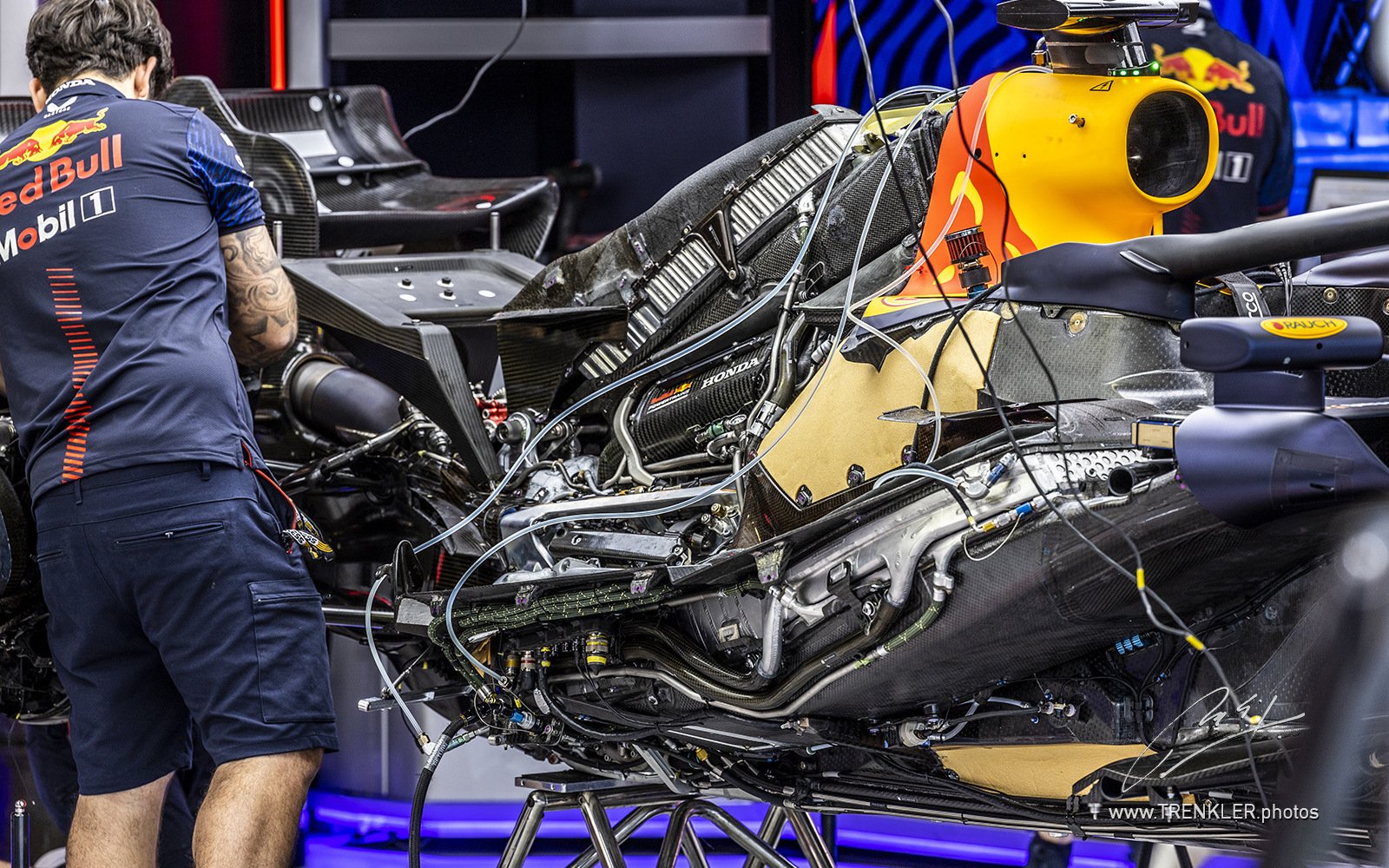
Pohonná jednotka Red Bullu RB19 (Martin Trenkler)
Following the failure of the new generation of power units, Formula 1 has no plans to extend their lifespan to 12 years as it did between 2014 and 2025. Instead, work is gathering pace behind the scenes on a new formula for 2030 or 2031. The first proposal for the new power units has now emerged in the media, and it will disappoint anyone who believed Mohammed Ben Sulayem’s populist rhetoric.
A return to V8 engines is looking increasingly likely, but probably it will not be the sort of V8s motoring purists dream of. Manufacturers are overwhelmingly backing their return, but not in the form proclaimed by the outspoken FIA president, who gave the impression he could bring naturally aspirated engines back to the grid through sheer force of personality.
No, according to the BBC, which says it has seen the new proposal drawn up by the six manufacturers currently involved in F1, both cylinder count and engine capacity will increase, but neither the turbo nor the battery will disappear.
“The plan, which comes after initial discussions with individual engine manufacturers on a one-to-one basis, proposes cheaper, lighter, simpler engines with a more visceral sound,” reports the BBC. “However, the FIA has moved away from its initial proposal to return to naturally aspirated engines.”
“The stated aim of the new rules is to introduce lighter, more responsive cars, increased emphasis on driver skill, relevant technologies, reduced cost, to make it easier for new manufacturers to enter F1 and to continue with the sport’s commitment to reducing emissions,” reports the British broadcaster.
That all sounds very good, and many will certainly welcome these changes, particularly after the fiasco surrounding this year’s engines. But if you are expecting a return to loud engines with a fantastic soundtrack, caution is advised. According to the BBC , the new engines are set to have a capacity of between 2 and 2.3 litres, a smaller turbo running lower boost pressure and a less powerful hybrid system.
The emphasis on batteries will be reduced, but the engines will have a smaller capacity than in 2013. Output from the electrical element is expected to fall from the current 350 kW to 200 kW. “The idea is for 100kW (134bhp) of this to be available at all times, with a further 100kW to be used for a push-to-pass or overtake mode,” reports the BBC.
The new power units are expected to produce around 900 horsepower in total – approximately 630 from the internal combustion engine, with the remaining 270 supplied by the electrical element. Sustainable fuels will also remain, although F1 has set itself the target of significantly reducing their production costs.
“The aim is to cut a total of 80kg from the overall weight of the cars,” reports the BBC, outlining another ambitious target.
Why the change of heart?
All of that sounds good and looks like a major step forward compared with the current situation. Yet the proposal is also a long way from what the FIA president had proclaimed. Quite clearly, even he was unable to impose his vision on the manufacturers.
The turbo will remain in recognition of “the need for the engines to be road-relevant”. Turbocharging will also improve efficiency and reduce the new cars’ fuel consumption. “The published proposals can be seen as a kind of middle ground between Ben Sulayem’s initial stance, the desire of at least some manufacturers to keep turbos and a significant hybrid element, and a recognition that the latest rules were flawed in concept and execution,” the BBC reported.
The proposal sets out a vision with which all the current power unit suppliers, along with Cadillac, which is part of the working group, are largely satisfied.
A single engine supplier?
According to the BBC, however, the intriguing details do not end there. The document submitted to the FIA reportedly outlines two possible routes for developing the new engines. One proposal said to be on the table would make the power unit a standardised component supplied to all teams by an external supplier, with scope to adapt it to their own requirements.
“One is aimed at minimising necessary adaptation – for example, a 2.1-litre V8 could be produced by simply adding two cylinders to the current 1.6-litre blocks and reducing the size of the turbo and MGU-K (hybrid motor),” reports the BBC.
“The other, more controversial, is to have an external manufacturer design and supply a baseline power-unit with a high degree of standardisation, on to which manufacturers could add a degree of customisation,” the British broadcaster’s article states.
This second proposal, however, reportedly lacks broad support among the manufacturers, who would prefer to keep engine development and production in-house. “However, insiders say the manufacturers are all aligned on wanting to design and build their own power-units and for engines to remain a performance differentiator,” the BBC adds.
There is still a long way to go. Among other things, the document includes a proposal to slash the power unit cost cap by as much as 50 per cent. Quite how that could be achieved, however, remains very much open to question. It also remains unclear whether the new engines will be introduced in 2030 or 2031 – despite the president’s threats to impose the changes unilaterally if they are not introduced in 2030.