Liberty Media buys back shares from its founder as Malone receives “unsolicited offers” to sell

Getty Images/Haas
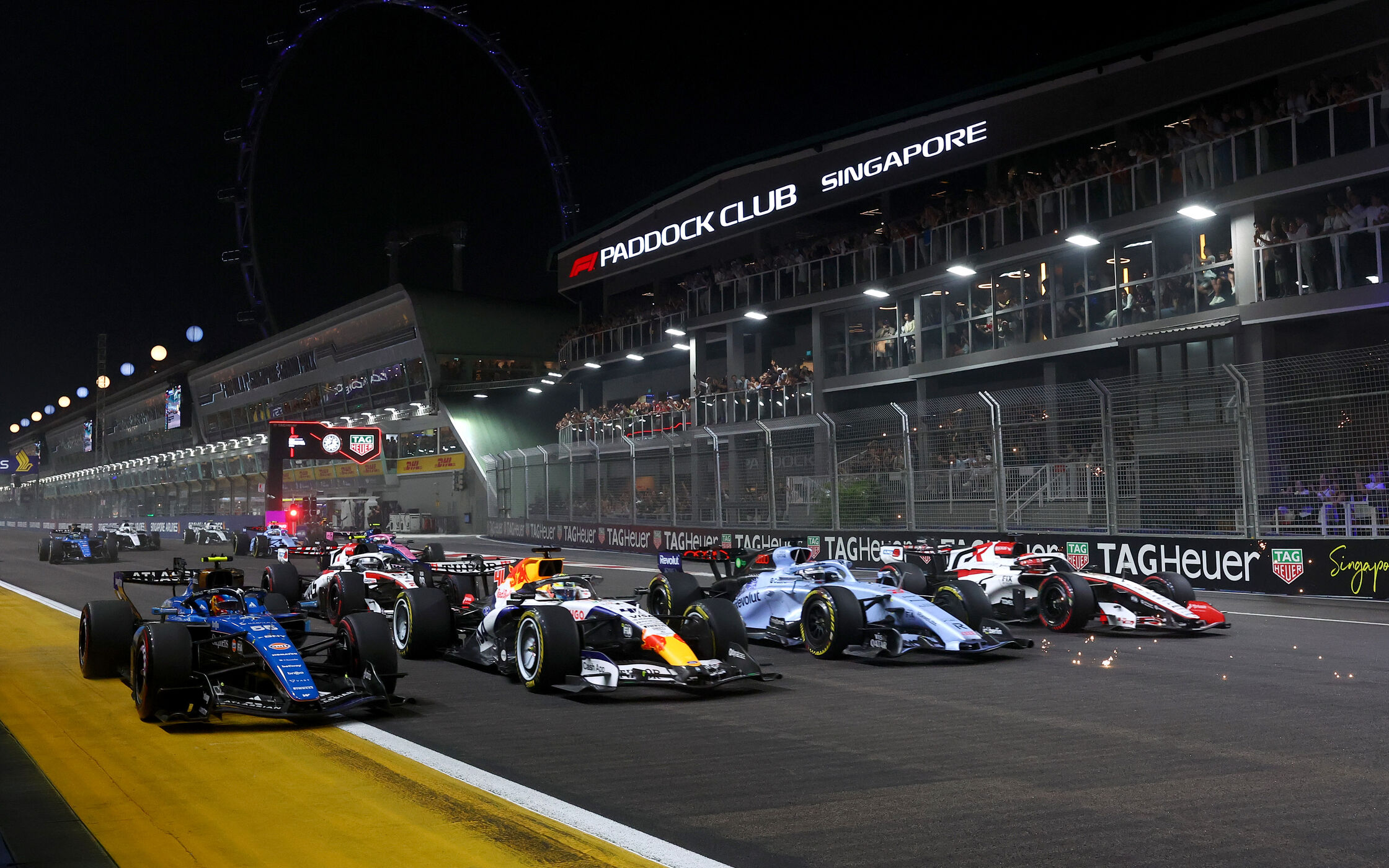
Over the past decade, Formula 1 has become a huge money-making machine, generating returns for drivers, teams, sponsors and partners, but above all for commercial rights holder Liberty Media. Following its purchase of a majority stake in MotoGP, the value of its assets is expected to continue rising rapidly, attracting interest from investors. In recent days, Liberty Media has even taken several steps to prevent it from losing control of the company.
Liberty Media has several shareholders with voting rights. Until recently, the largest was its founder and former chairman, John Malone, who held as much as 48 per cent of the voting rights through his companies. All other shareholders together held 52 per cent, with Linonia Partnership LP and Vanguard Group the largest among them, each holding 4.4 per cent.
Following Malone’s recent departure as chairman, outside investors appear to have sensed an opportunity to gain control of Liberty Media, and therefore Formula 1. According to a company statement issued on 5 November, Malone received “a number of unsolicited offers from third parties” to buy his shares, prompting the company to act.
Liberty Media had three classes of shares: Series A (traded under the ticker FWONA), carrying one vote per share; Series B (FWONB), carrying 10 votes per share; and Series C (FWONK), with no voting rights. In early November, John Malone “sold”, or rather exchanged, 2.32 million “high-vote” Series B shares for approximately 600,000 “lower-vote” Series A shares and six million Series C shares. The original Series B class was eliminated.
John Malone is therefore no longer Liberty Media’s largest holder of voting rights. His dominant 48 per cent share of the voting rights has fallen to approximately 2.6 per cent in exchange for a bigger “slice of the pie” — the American billionaire received an additional 3.7 million shares.
Liberty Media is moving from a company with one dominant shareholder to one in which the board will have greater influence and will need to secure the support of several shareholders for major decisions. Following the restructuring, Linonia Partnership LP and Vanguard Group now hold the largest shares of the voting rights, at approximately 8.4 per cent each.
Formula 1’s commercial rights holder expects the redistribution of voting rights to simplify the company’s governance. “Helps us effectively control our own destiny forward,” Liberty said. That also includes control over any potential sale of F1.
Liberty Media chief executive Derek Chang offered assurances that no sale is currently planned. The company sees further scope to increase the value of its investment. “We’re still focused primarily on growing the businesses that we have. And as we stated previously, sort of investing behind those businesses and growth plans that they have is probably the biggest priority as we think about other forms of capital allocation.”
Liberty Media bought Formula 1 in 2017 for $4.6 billion. Today, its value stands at around $28 billion. Liberty wants to repeat that success with MotoGP, which it recently brought under its wing for $3.3 billion.
One other intriguing question remains: who might have been interested in Malone’s voting shares, and therefore Formula 1? According to Liberty, Malone received several offers. Saudi Arabia’s Public Investment Fund, PIF, is likely to have been among the interested parties. In 2023, there was speculation that Arab investors had offered Liberty Media $20 billion for the commercial rights.
“Formula 1 has an exceptionally good economic structure,” said then-chairman John Malone. “It’s a public company. If somebody gets carried away, and they want to buy it, and they’re willing to pay more for it than the board thinks that they can deliver to the shareholders, then we would sell it. That’s the bottom line.”