Skip to content
F1online
skSlovenčinacsČeštinaenEnglishplPolskiesEspañolfrFrançaisitItalianohuMagyar
HomeNewsResultsDriversTeamsCalendar
skSlovenčinacsČeštinaenEnglishplPolskiesEspañolfrFrançaisitItalianohuMagyar
HomeNewsQuick NewsResultsDriversTeamsCalendar
Lando NorrisMexican Grand Prix 2026

Saved up energy for an overtake? The MGU-K limiter could rein you in

Milan Kubala
AuthorMilan Kubala
Publishedtoday 01:09 PM
  • Slovenčina
  • Čeština
  • Polski
  • Español
  • Français
  • Italiano
  • Magyar
Lando Norris
©

X/McLaren

Share
Share
Share

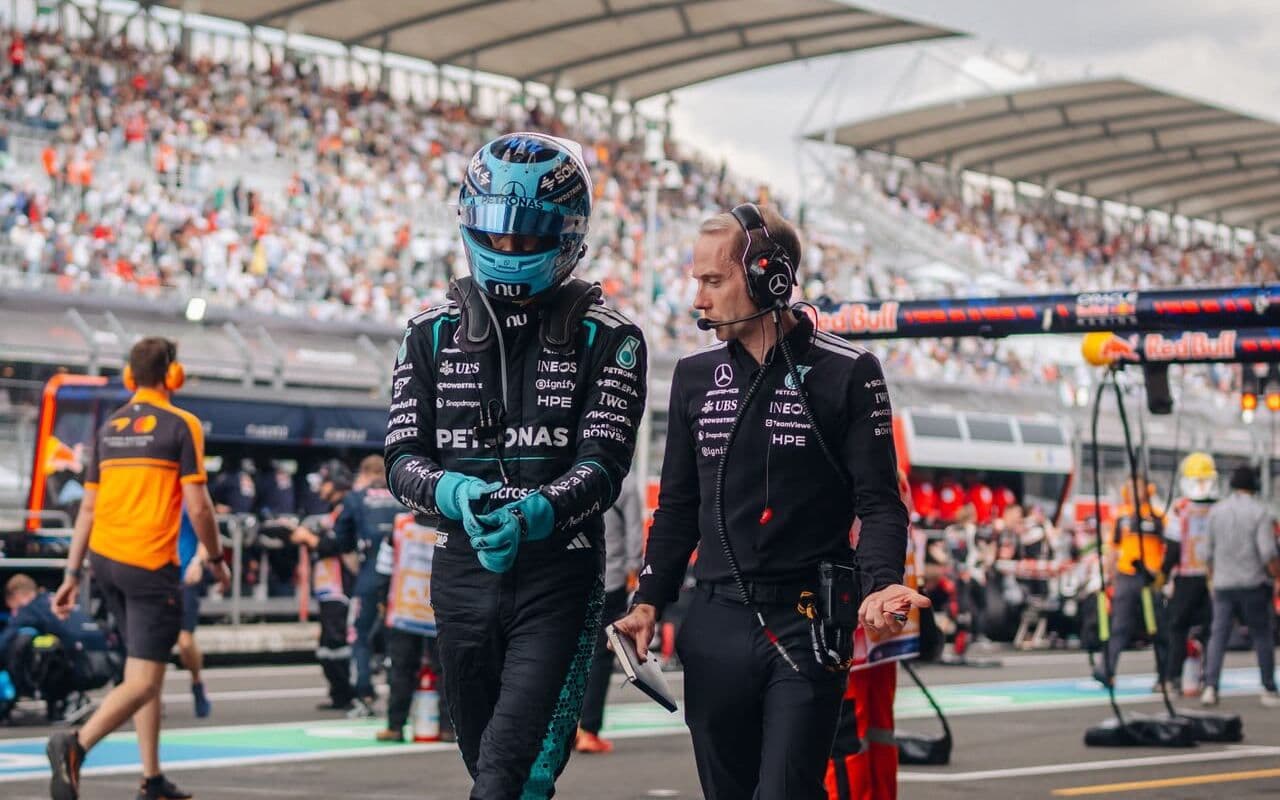
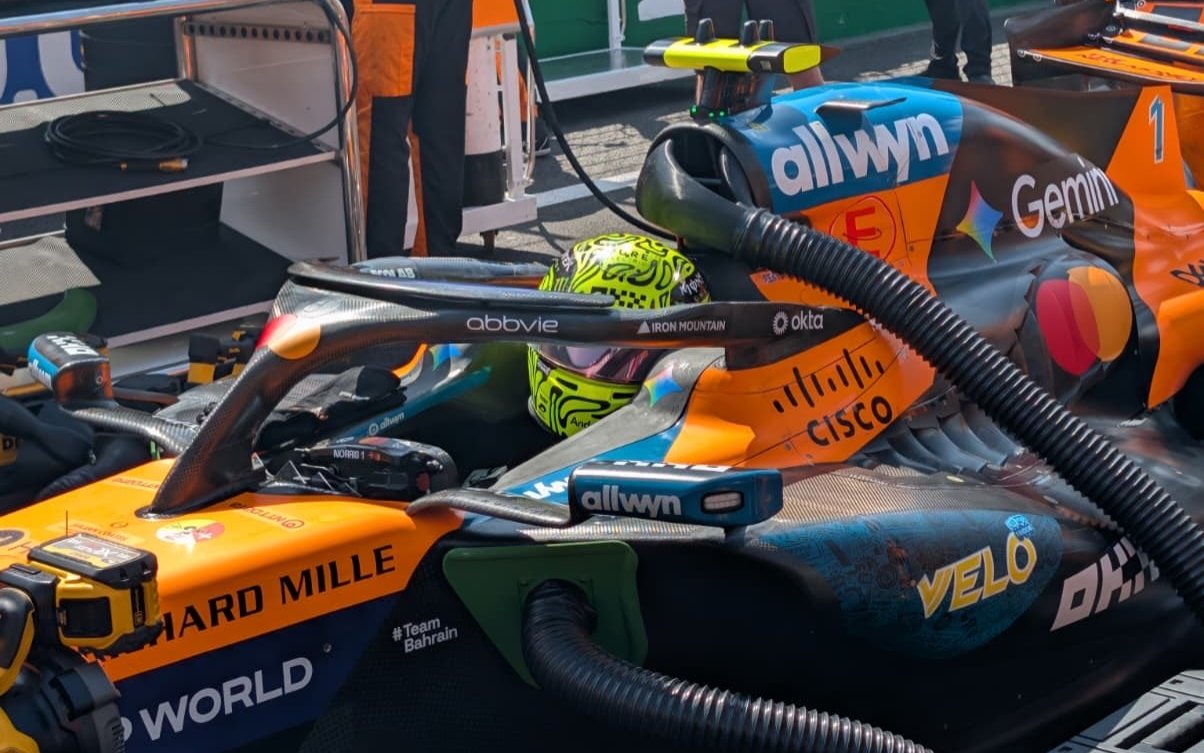
The Mexican Grand Prix was a test of patience for many drivers. Overtaking on the start-finish straight proved problematic. Lando Norris endured a particularly frustrating Sunday, spending a long time unable to get past George Russell despite clearly being quicker. The reigning world champion believes an incorrectly set limiter is to blame.

The FIA has to tailor everything to an energy-starved power unit concept. We have been discovering the shortcomings of the new regulations since the start of the season, and there are still more to come. According to Norris, the Mexican Grand Prix exposed another problem with overtaking: the cars have no chance of exceeding a certain speed threshold. This time, however, it is not directly related to the amount of energy in the battery.

How the FIA “restricts” MGU-K deployment

A year ago, Toto Wolff entertained the idea that the new generation of cars could reach speeds of up to 400 km/h on the straights. The reality, however, looks very different. Even at an altitude of 2,200 metres above sea level, where the air is almost 25 per cent less dense, the fastest cars reached “only” 360 km/h.

This is directly linked to the MGU-K settings, which vary from circuit to circuit. In Mexico, the MGU-K supplied the driver with its full 350 kW (469 hp) only up to 290 km/h (see graph below). Beyond that speed, the electrical output was reduced, with the MGU-K switching off entirely at 345 km/h.

A different map applies in overtake mode: the driver receives the full 350 kW of MGU-K assistance up to 338 km/h. From that point, its output drops linearly until 355 km/h. This is also why almost every car’s top speed was around that mark. The fastest overall were Gasly (361 km/h), Hülkenberg (358 km/h) and Hirakawa (357 km/h).
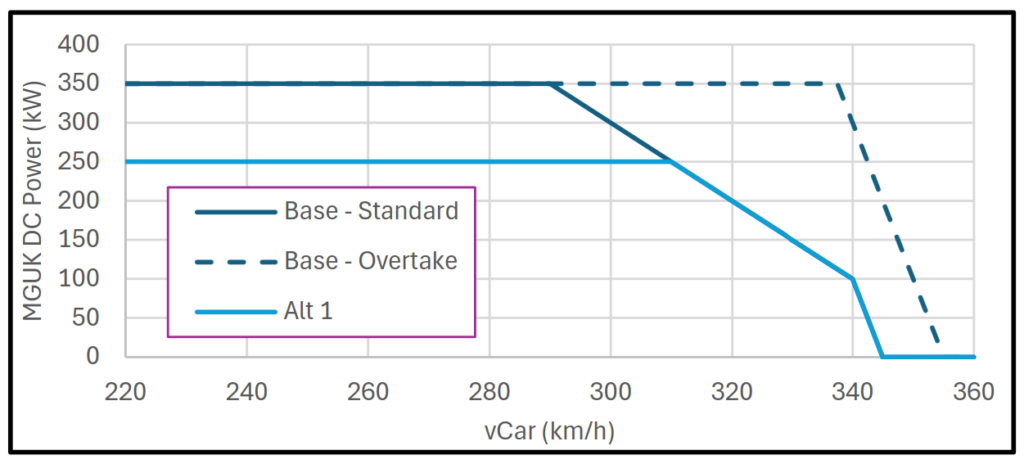
MGU-K deployment for the 2026 Mexican Grand Prix: standard mode, overtake mode and wet-weather mode.

“I mean the main thing with overtaking is you just have the limiter on,” said Lando Norris after the Mexican race. “Like you literally have a limiter that stops you from going over a speed, so it doesn’t matter if you come out two tenths behind the guy, you just hit the limiter and the same limiter as them, and then you cannot do anything, so it kind of ruins racing.”

Lewis Hamilton also highlighted this after the race, having tried in vain to overtake Max Verstappen. That was partly down to the Ferrari power unit’s lack of power, but also to the ineffective overtake mode.

Hamilton could have saved an entire battery’s worth of energy and used it in one aggressive attack on the start-finish straight, but with MGU-K assistance cutting out at 355 km/h, he had no way of overtaking Verstappen on the straight. The speed differential was also smaller because slipstreaming was less effective than at sea level.

Lando Norris believes it is a disgrace that the pinnacle of motorsport is not faster. “It’s something that they need to improve for next season. Especially when motorbikes go 370, and you don’t have a seat belt or anything, and we should easily be able to go quicker than a motorbike, you know.”

Dreams of higher top speeds meet reality

Norris believes changing the split between combustion engine and electrical power will not solve the problem. The FIA needs to adjust the power deployment map and give more thought to the difference between overtake mode and standard MGU-K deployment.

“No, I mean that’s got nothing to do with it,” he said of the revised power split. “We still achieve the same top speeds when you have Straight Mode, and in Straight Mode and with the same power next year you still achieve the same top speed, so you just need to make the limiter higher. It’s as simple as that.”

It is, however, in the FIA’s interest to keep top speeds under control. The reason is not concern about how dangerous the cars might be at 380 km/h. Its greater concern may be how quickly the batteries would drain at those speeds.

The power needed to overcome aerodynamic drag increases with the cube of speed. This means that for a car to accelerate from, say, 300 to 330 km/h, an increase of 10 per cent, it needs as much as 33.1 per cent more power available.

We could also look at that example in reverse. If the engine department miraculously manages to increase power unit output by an incredible 10 per cent (say, from 900 to 990 hp), that translates into a gain of just 3.2 per cent in outright top speed.

Put simply, energy use at high speeds is very inefficient, and Formula 1 now has to count every joule. If the FIA does not cap MGU-K deployment, problems with energy recovery and depleted batteries will be even more pronounced elsewhere on the circuit — perhaps even at tracks where this is not currently an issue.

The rule-makers have taken a wrong turn.

TagsLando NorrisMexican Grand Prix 2026

Spotted an error or have feedback?

Help us improve by reporting issues or suggesting improvements

Related Articles

Lando Norris

Norris happy with sixth because “the car is undriveable”

November 1, 2026
Max Verstappen

Norris ruined his qualifying: I couldn’t believe my eyes, says Verstappen

November 1, 2026
Lando Norris

Norris’ title defence goes badly wrong: Nothing more could have been done

October 30, 2026
Paddock bulletin

Quick News

  1. November 3, 2026

    FIA to monitor compression ratio while cars are running from next year

    The compression ratio controversy has all but faded from fans’ minds, but discussions continued in the paddock.

    According to the Italian edition of motorsport.com, stricter checks will be introduced from the start of the 2027 season. The FIA will be able to monitor the compression ratio while the car is running, with a new sensor to be fitted inside the combustion chamber.

  2. November 2, 2026

    Title permutations: Mercedes could clinch constructors’ championship in Sao Paulo

    The Silver Arrows have celebrated Kimi Antonelli’s drivers’ title and could be toasting the constructors’ crown on Sunday.

    Assuming the 2026 season is completed as originally scheduled, including the Qatar and Abu Dhabi Grands Prix, Mercedes need to score three more points than Ferrari in Sao Paulo.

    They currently lead the Scuderia by 126 points, but must hold an advantage of at least 129 points after the Sao Paulo Grand Prix.

  3. November 2, 2026

    Max Verstappen won from fifth on the grid and broke his own record

    Max Verstappen is known for not needing to start in the top three to win. Until now, however, the Dutchman had never won from fifth on the grid.

    He finally did so at the Mexican Grand Prix, extending his own record: he has now won from 11 different grid positions: 1st, 2nd, 3rd, 4th, 5th, 6th, 7th, 9th, 10th, 14th and 17th.

    Fernando Alonso ranks second on this list, having won from nine different grid positions. Niki Lauda, Nelson Piquet, David Coulthard, Michael Schumacher, Kimi Räikkönen and Lewis Hamilton have each won from eight different starting positions.

  4. November 2, 2026

    Kimi Antonelli and Lewis Hamilton: 2018 vs. 2026

    In 2018, Lewis Hamilton shook hands with Kimi Antonelli, who was among the children on the grid at the Italian Grand Prix as part of the Grid Kids programme.

    Eight years later, it was Antonelli shaking hands with youngsters, himself soon to become the youngest world champion in history.

    Who knows whether one of these boys will be a leading light in Mexican motorsport in eight years’ time?

  5. November 2, 2026

    Hamilton received well-meaning but ultimately unhelpful advice during the race

    A race engineer’s job is to advise the driver on how to get the most out of the car. During Sunday’s race, Lewis Hamilton received some well-intentioned advice that ultimately proved useless.

    “You have overtake and boost on the main straight,” Hamilton’s race engineer Carlo Santi advised him, outlining the tools at his disposal to attack Verstappen.

    The seven-time champion asked with a sigh: “How am I supposed to overtake a Red Bull engine?”

    Even in Mexico’s thin air, Ferrari struggled with a lack of straight-line speed. Its smaller turbo helped at the start and on corner exits, but towards the end of the straights, its rivals’ larger turbos and more powerful power units overall came into their own. Hamilton, however, believes the Scuderia can overcome this disadvantage in 2027.

  6. November 2, 2026

    Nico Rosberg: It’s always Charles’ fault

    Nico Rosberg points out where things are going wrong at Ferrari. “But interestingly it’s always Charles’ fault, isn’t it? It’s never Lewis’s fault. In the last couple of times, in Monza was Charles, here it was Charles…”

  7. November 2, 2026

    Kimi Antonelli’s father shares childhood photos of the new champion

    Kimi Antonelli’s father gave interviews after the race with champagne in hand. He spoke about Kimi’s childhood and also shared some footage from the early days of his career.

  8. November 2, 2026

    Williams shines in the pit stops after three years

    Williams recorded the fastest pit stop for the first time in three years. All four tyres on Alex Albon’s car were changed in 2.11 seconds.

    Excluding drivers serving a penalty, the slowest pit stops were those of Albon (5.67 seconds), Bottas (6.28 seconds) and home favourite Sergio Pérez (8.41 seconds).

Show all quick news
F1online

Your ultimate source for Formula 1 news, race updates, and analysis.

Quick Links

  • Latest News
  • Quick News
  • Photo galleries
  • Race Calendar 2026
  • Race Calendar 2027
  • Results

Resources

  • Standings
  • Drivers
  • Teams
  • Circuits

© 2020–2026 F1online. All rights reserved.

Privacy Policy

Formula 1 · F1online

Most read

  1. 1

    John Elkann intervened and was furious, according to Autoracer

  2. 2

    Russell breaks silence on social media: It’s been tough to deal with

  3. 3

    Leclerc also blames circuit layout for incident. Vasseur disagrees: That is no excuse

  4. 4

    Engines face fresh wave of criticism after Mexico: We have never seen anything worse in this sport

  5. 5

    Mexican GP results change: Stewards hand out three penalties as Hirakawa moves into the top 10