Mercedes’ new turbo will erode one of Ferrari’s advantages, Italian insiders explain

Alex Bierens de Haan/Mercedes
Mercedes confirmed on Tuesday that it will use its ADUO token to introduce an upgraded turbo during the Las Vegas weekend. According to Italian insiders at AutoRacer, the Silver Arrows can expect gains of around a tenth of a second per lap, while also reducing Ferrari’s advantage on corner exits.
Current information suggests the new turbo will be available to all Mercedes customers, with McLaren and Alpine having already confirmed they will run it. At the Mercedes works team, only Kimi Antonelli will receive it, as Russell changed components in Brazil and Mercedes wants him to start as high up the grid as possible. According to Toto Wolff, the new turbo will not deliver gains large enough to offset the loss of grid positions.
So what does Mercedes hope to achieve with the new turbo? Italian insiders at AutoRacer revealed that engineers have spent recent months working to make it smaller. Reliability issues encountered during development meant it did not make its track debut in either Malaysia or Austin, as originally expected.
Now, however, the new turbo has arrived. “Mercedes has worked on a (marginally) smaller solution , with the aim of reducing turbolag and improving the internal combustion engine’s response at low revs,” reports AutoRacer. “Therefore, this update is not designed primarily to increase maximum power, but rather to make delivery more effective at the lower end of the torque curve.”
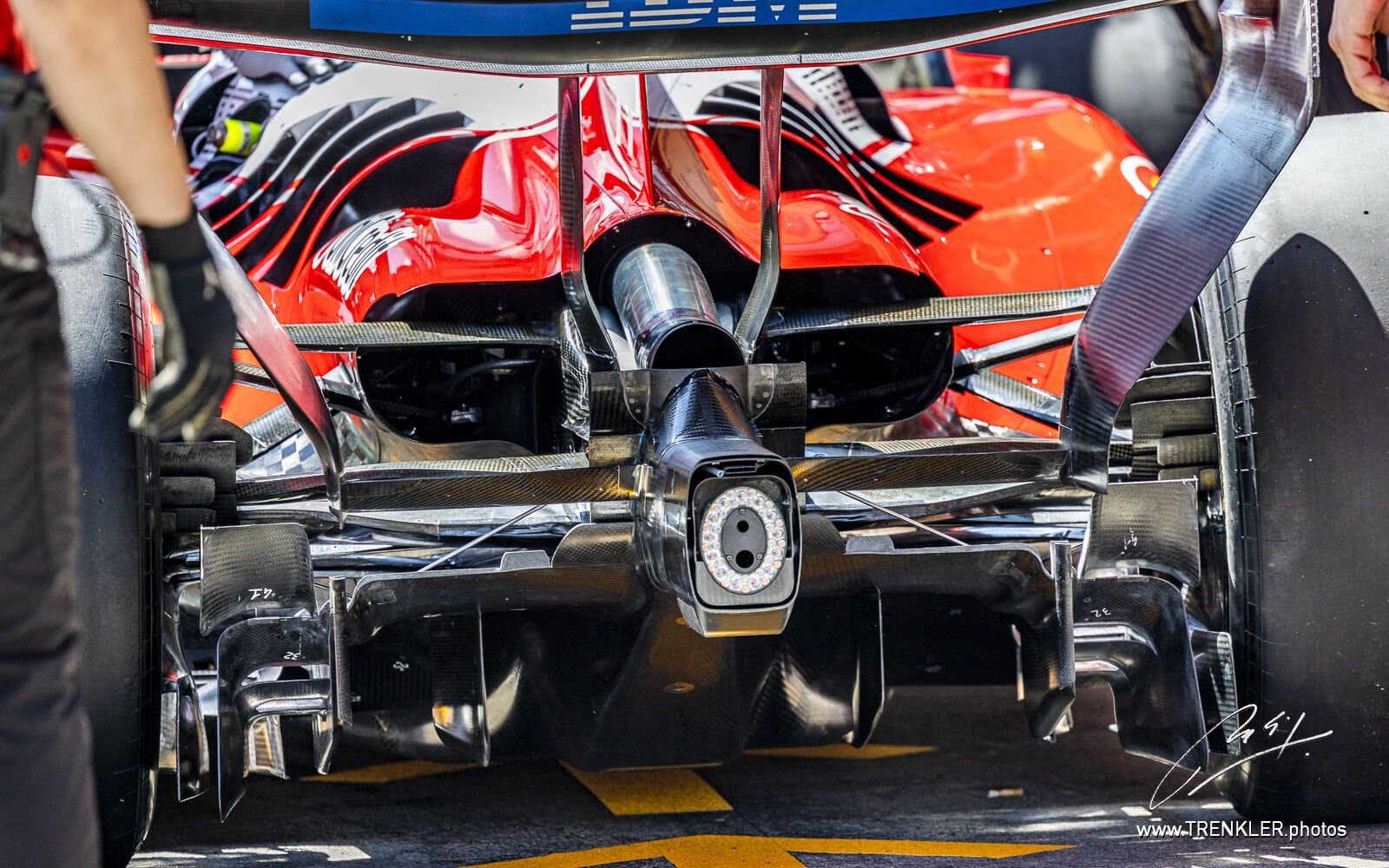
Until now, this has been one of the few advantages of Ferrari’s power unit. The Scuderia opted for a small turbo that spools up more quickly, providing an advantage under acceleration out of slow corners, as well as at the start of a Grand Prix. Another benefit is that, in some corners, the driver does not have to shift down to such a low gear and risk upsetting the car’s balance to keep the turbo spinning within its optimum operating range.
“Wolff described the expected performance gain as relatively modest. However, the information gathered by AutoRacer indicates a potential average gain of close to a tenth of a second , albeit slightly lower,” writes Piergiuseppe Donadoni. “However, in such a competitive Formula 1, this improvement could have significant impact, especially if combined with easier power unit management.”
Different design philosophies converge over the course of each regulation cycle. While Ferrari made its turbo slightly larger after the summer break, Mercedes is now making its smaller. Looking ahead, on-track power unit performance will increasingly be determined by outright power and energy management, rather than differences in design philosophy.