Organisers draw up evacuation plan for drivers, but journalists may have been forgotten

Twitter/Scuderia Ferrari
The security situation in the Middle East may have calmed down, but organisers still cannot afford to leave anything to chance. F1 drivers will therefore attend a briefing to receive instructions and details of an evacuation plan in the event of a security threat. Carlos Sainz was surprised that journalists knew nothing about it.
November’s US congressional elections forced US President Donald Trump and the Republicans to rethink their war strategy. Since the elections, there have been no major conflicts in the Middle East that would jeopardise MotoGP or force Formula 1 to cancel its final two events.
However, the situation certainly cannot be described as completely safe. Kuwait’s defence ministry reported that two Italian nationals were killed on Thursday — media day — while carrying out maintenance on air defence equipment, attributing their deaths to an Iranian drone attack. Iran officially denied responsibility for the attack. According to a spokesperson for the armed forces, the Iranian government’s position was that “no military or offensive operations have been conducted”.
In any case, fighting has not stopped entirely in the Gulf itself, with eleven vessels attacked since 20 November. Several broadcasters therefore decided in advance that travelling to Qatar was not worth the risk. Germany’s Sky Sports, Spain’s DAZN, Austria’s ServusTV and France’s CANAL+ are among those that will produce their live coverage from their studios back home.
Several teams, including Mercedes and Ferrari, have stated that any employees concerned about travelling to Qatar can miss the grands prix without facing any repercussions. The same applies to FIA employees.
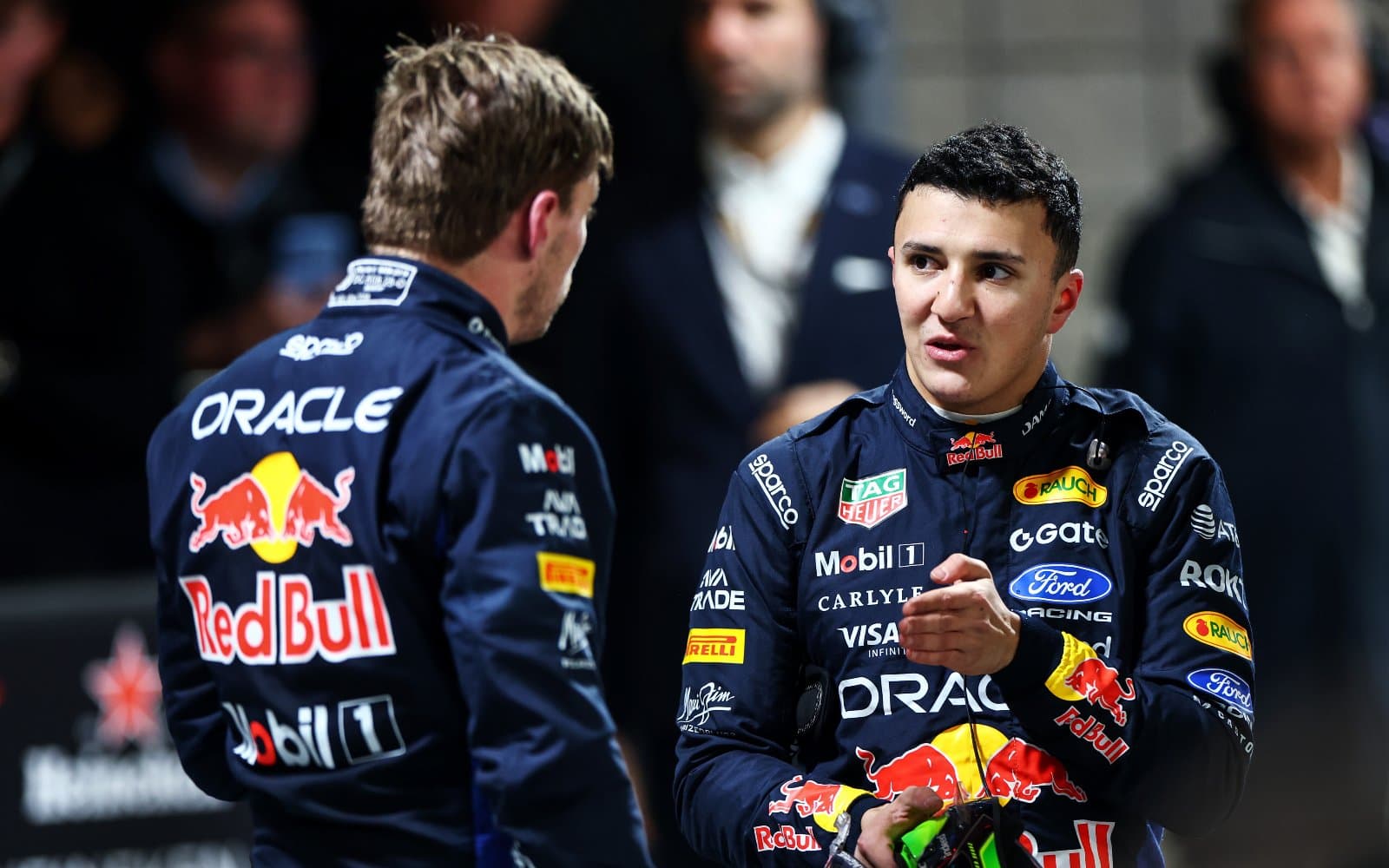
For the drivers, however, it is not quite so straightforward. All have, naturally, arrived in Qatar, although Max Verstappen admitted he would have preferred Formula 1 to replace the season-ending races with Imola.
Carlos Sainz revealed on Thursday that the drivers were due to attend a security briefing. “Yes, and I think you (the press) are included as well. In fact, there is an evacuation briefing,” explained Carlos Sainz, as quoted by Marca. The journalists shook their heads at the Spaniard’s remarks, however; they knew nothing about any briefing.
Sainz was taken aback. “I’m surprised; I thought perhaps you were included,” he remarked. “I don’t know, that’s what I’ve been told and the information I’ve received; that’s the only thing I can comment on. That’s what has been communicated to me, although I expected you (the press) to be covered as well.”
One journalist then joked that they would simply follow the drivers into the shelters. “I’ll take as many of you as I can,” joked Sainz, confident that none of this would ultimately be necessary.
According to journalist Thomas Maher, the media should be aware of the security protocol. “Suggestions circulating that media is not included in F1’s evacuation plans, in the event of them being activated, are not true: all paddock members are included in the contingency plans. If worst was to come to worst, noone would be left behind.”
Security guidelines for November’s MotoGP race
Ahead of November’s MotoGP race, organisers issued security guidelines for riders, team personnel and paddock guests to follow in the event of an attack.
If there is an alert, stay calm and do this:
- Move to cover right away. No need to look out the window or film; just go.
- At the hotel, day or night: take the stairs to the hotel’s designated safe area. Don’t use the elevator. If you can’t get there in time, stay on your own floor in the inner area by the stairwell and elevators, away from windows, and sit against an inner wall. If you can’t leave your room, stay low on the side away from the window.
- At the circuit: go to your team’s agreed solid building. Avoid tents, open paddock areas and glass-fronted buildings.
- Outside: get into the nearest building. If there isn’t one, get low to the ground and cover your head.
- In a vehicle: pull over and go into the nearest building. If there isn’t one, step away from the vehicle, get low and cover your head.
- Stay put for at least 10 minutes, or until the all-clear message, whichever is later.
- After: don’t touch or photograph any debris; report it to local emergency services. Check in with your team or company group so everyone is accounted for.