
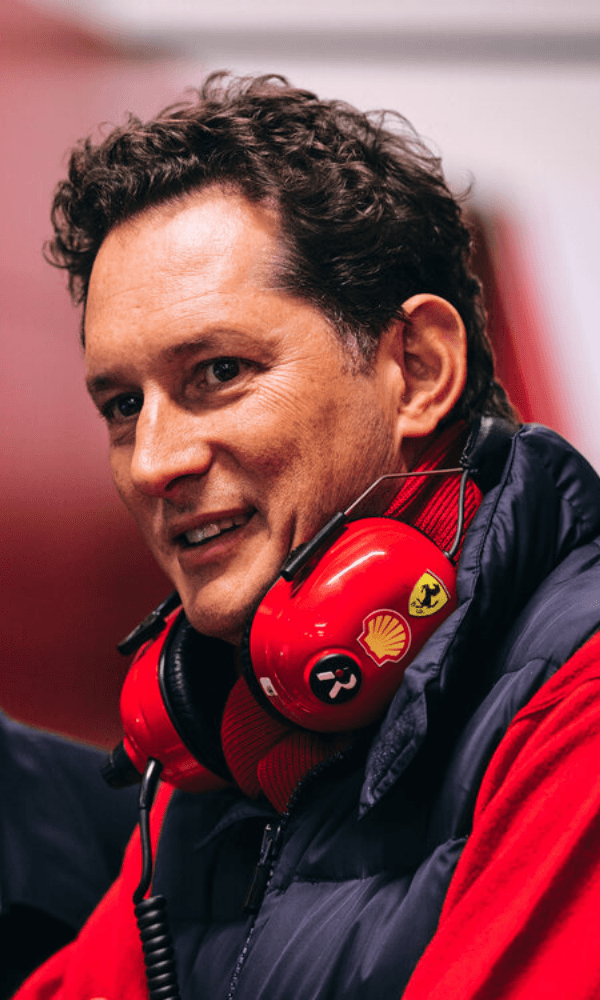
JohnElkann
President
Started
 Scuderia Ferrari
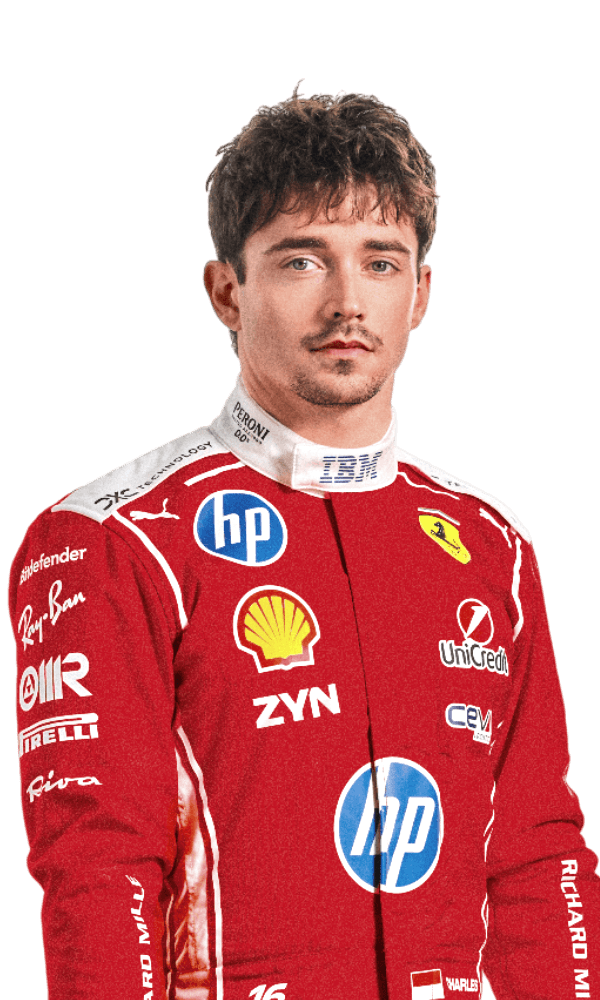
President
Started
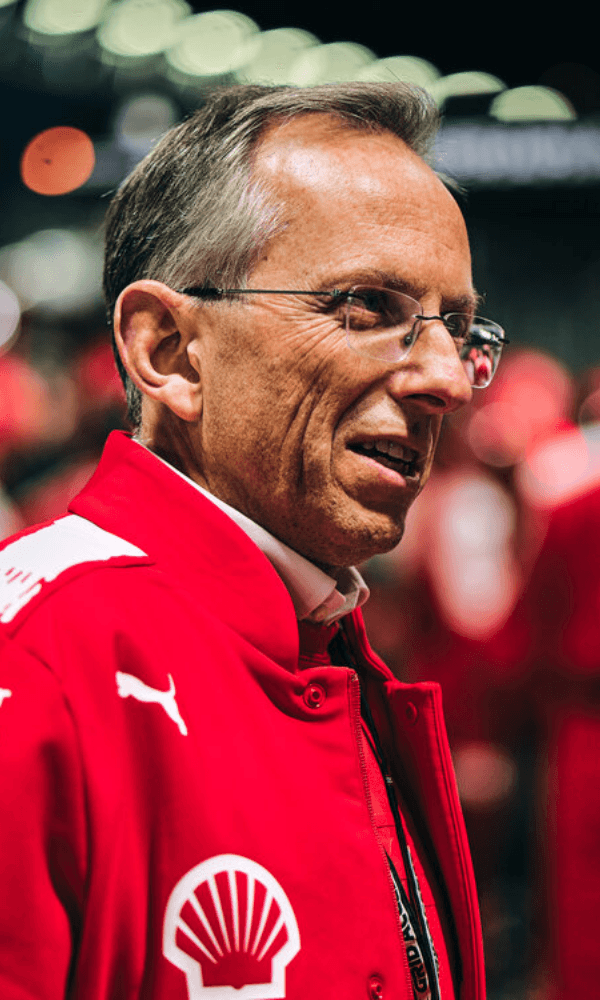
CEO
Started
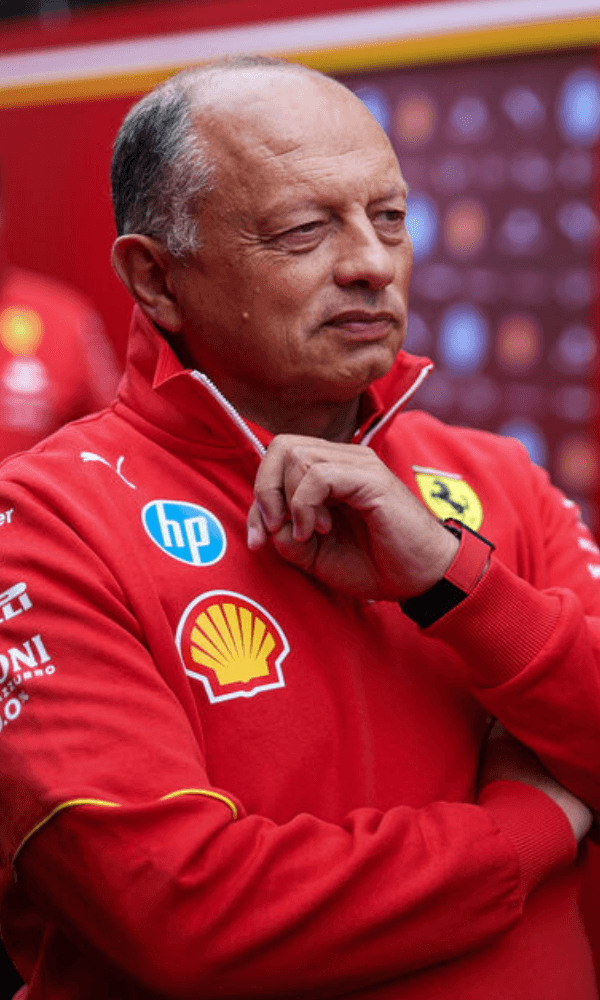
Team principal
Started
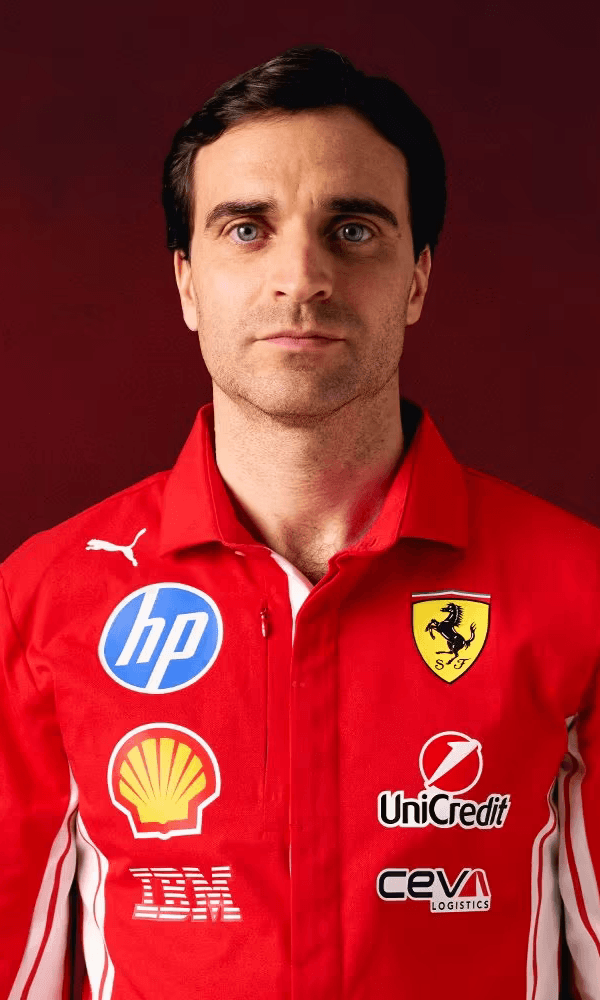
Deputy Team Principal
Started
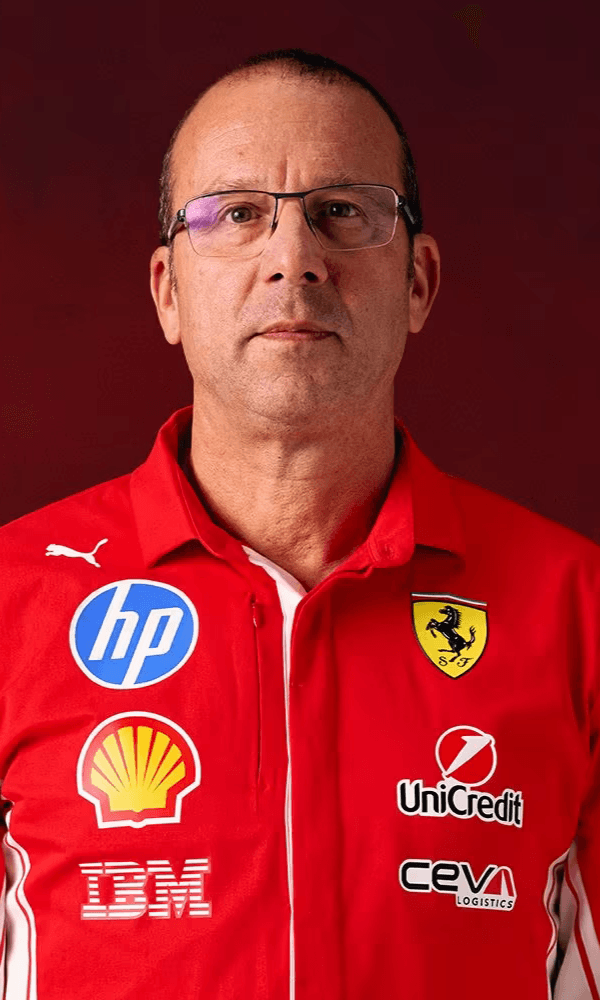
Technical Director Chassis
Started
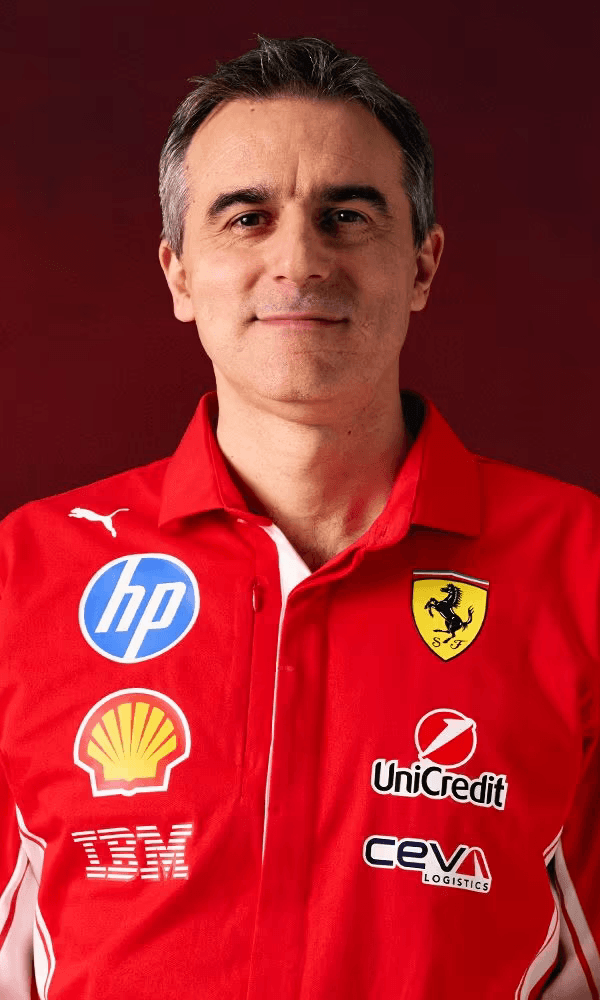
Technical Director Power Unit
Started
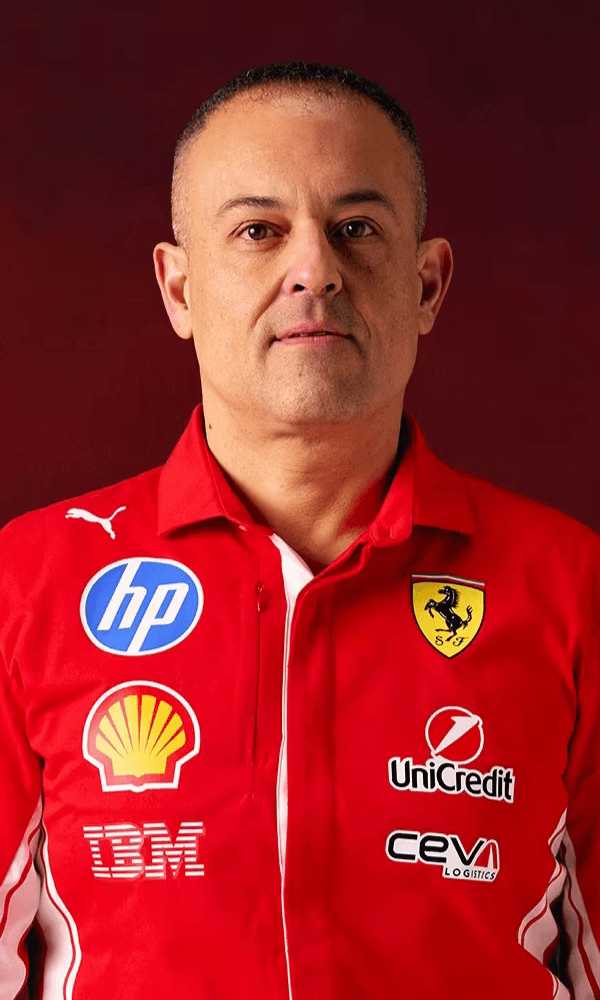
Sporting director
Started
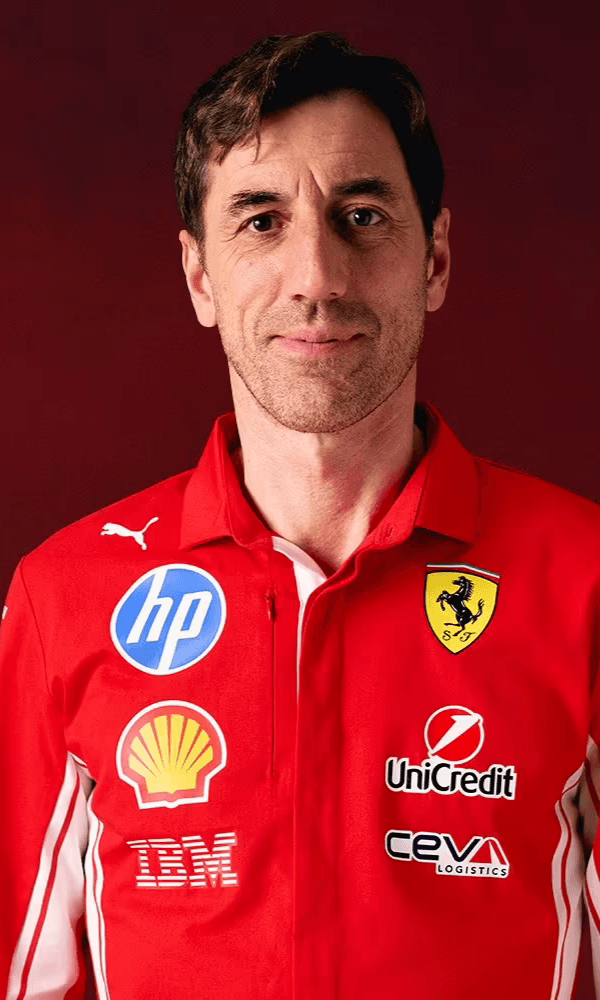
Head of Track Engineering
Started
Ferrari was absent from the grid for the very first Formula 1 World Championship Grand Prix, but has competed in every season of the championship since. Since its debut in 1950, the Italian team from Maranello has become the most successful in F1 history, with 16 constructors’ championships, 15 drivers’ titles and 248 Grand Prix victories by the end of the 2025 season. Ferrari enjoyed its most successful era with Michael Schumacher, but its history was also shaped by Alberto Ascari, Niki Lauda, Gilles Villeneuve and Kimi Räikkönen. In more recent years, Fernando Alonso, Sebastian Vettel and Charles Leclerc have sought to emulate their legendary predecessors, with seven-time world champion Lewis Hamilton joining Leclerc in 2025.
The history of Scuderia Ferrari began in 1929, when Enzo Ferrari founded his own racing organisation, initially working with car manufacturer Alfa Romeo. After the Second World War, he began building cars under his own name and, in 1950, brought his marque into the newly established Formula 1 championship.
Ferrari made its debut at the 1950 Monaco Grand Prix with drivers Alberto Ascari, Luigi Villoresi and Raymond Sommer. Its first victory came a year later at Silverstone in Britain, where Argentina’s José Froilán González defeated the previously dominant Alfa Romeo cars.
Alberto Ascari built on that success, securing Ferrari’s first two drivers’ titles in 1952 and 1953. The Italian became one of the team’s first great figures, and his dominance helped establish its position among the championship’s leading teams.
Juan Manuel Fangio and Mike Hawthorn also won drivers’ titles with Ferrari in the years that followed. Another significant milestone came in 1961, when Phil Hill won the drivers’ championship and Ferrari claimed its first constructors’ championship. The successful Ferrari 156 was known for its distinctive front end, which earned it the nickname Sharknose.
John Surtees became world champion in 1964 and remains the only competitor to have won world titles in both motorcycle racing and Formula 1. Ferrari also secured its second constructors’ title.
After a less successful spell in the late 1960s and early 1970s, Ferrari began challenging for world championships again. Key roles were played by Luca di Montezemolo, who helped reorganise the racing department, and young Austrian driver Niki Lauda.
Lauda won his first world title in 1975, while Ferrari secured the constructors’ championship for the first time in 11 years. But 1976 brought one of the most dramatic events in the team’s history. The Austrian suffered a serious accident at the Nürburgring that almost cost him his life. Despite severe burns, he returned to the cockpit after just six weeks, but McLaren’s James Hunt ultimately won the drivers’ title.
Ferrari retained the constructors’ championship in 1976, and Lauda became world champion for a second time the following season. Further success came in 1979, when South African Jody Scheckter won the drivers’ title.
The early 1980s were marked by the tragic death of Gilles Villeneuve, who was killed during qualifying for the 1982 Belgian Grand Prix. Despite losing one of its most prominent drivers, Ferrari won the constructors’ titles in 1982 and 1983.
A long spell without championship success followed. Although the team continued to win individual races and fielded drivers such as Michele Alboreto, Nigel Mansell, Alain Prost and Jean Alesi, it had to wait until 1999 for its next constructors’ title.
A turning point in Ferrari’s modern history came in 1996, when two-time world champion Michael Schumacher moved to Maranello from Benetton. The German became the central figure in a project aimed at returning the Italian team to the top of Formula 1.
A strong team took shape under Jean Todt’s leadership, with technical director Ross Brawn and designer Rory Byrne playing important roles. Ferrari steadily improved the competitiveness of its cars, and Schumacher was already challenging for the drivers’ title in 1997 and 1998.
The first major success of the new era came in 1999. Although Schumacher missed six Grands Prix after an accident at Silverstone and his team-mate Eddie Irvine narrowly lost the drivers’ title battle, Ferrari secured its first constructors’ championship in 16 years.
In 2000, Schumacher ended Ferrari’s 21-year wait for a drivers’ title, defeating McLaren’s Mika Häkkinen in the decisive stages of the championship. A period of extraordinary dominance followed, during which the German won five consecutive world titles.
Ferrari also won six consecutive constructors’ championships from 1999 to 2004. Rubens Barrichello was an important part of that successful line-up, supporting Schumacher and regularly scoring valuable points for the team.
That dominance peaked in 2004. Schumacher won 13 of the 18 Grands Prix to secure his seventh world title and his fifth with Ferrari. Together with Barrichello, he delivered 15 victories for the team in 18 races.
Schumacher brought his first spell in Formula 1 to an end after the 2006 season. He spent 11 seasons with Ferrari, claiming 72 victories and five drivers’ titles. He remains the most successful driver in the Italian team’s history.
Following Michael Schumacher’s departure, Kimi Räikkönen arrived from McLaren to become Ferrari’s new leading driver. The Finn won the world title in his very first season at Maranello.
The championship was not decided until the season-ending 2007 Brazilian Grand Prix. Räikkönen won the race and capitalised on dropped points for McLaren pair Lewis Hamilton and Fernando Alonso. He finished with 110 points, just one more than each of his rivals.
Ferrari also won the constructors’ championship, helped by McLaren’s exclusion from the team standings following the espionage scandal involving confidential information belonging to the Italian team.
A year later, Felipe Massa challenged for the drivers’ title. The Brazilian won the final Grand Prix of the 2008 season at his home circuit, Interlagos, but Lewis Hamilton secured the fifth place he needed on the final lap to take the title by a single point.
Ferrari nevertheless claimed its 16th constructors’ championship in 2008. As of the end of the 2025 season, that remained the Italian team’s last title in either of Formula 1’s two main championships.
In 2010, Ferrari signed two-time world champion Fernando Alonso. The Spaniard immediately demonstrated his quality, challenging for the world title in his first season. He went into the final race in Abu Dhabi leading the championship, but finished seventh after a failed strategy, leaving Red Bull’s Sebastian Vettel to take the title.
Alonso had another major opportunity in 2012, fighting for the title until the final race despite a less competitive car. Once again, however, he lost out to Vettel in the final standings, this time by three points.
After Alonso’s departure, it was Sebastian Vettel who joined Ferrari in 2015. The four-time world champion returned the Italian team to regular contention for victories and posed a serious threat to Mercedes’ dominance in 2017 and 2018.
Lewis Hamilton ultimately won both championships, however. Ferrari paid the price for a combination of technical problems, driver errors and an insufficient rate of car development during the decisive stages of each season.
Charles Leclerc became the team’s new face in 2019, joining from Sauber. The young Monegasque claimed his first two victories in his debut season with Ferrari, winning in Belgium and then in front of the team’s home fans at Monza.
After a disappointing 2020, in which Ferrari finished only sixth in the constructors’ standings, the team gradually began to return to the front. In 2022, Leclerc challenged Max Verstappen for the title in the early part of the championship, but his campaign was increasingly undermined by technical failures, strategic decisions and Red Bull’s growing dominance.
Frédéric Vasseur took charge of Ferrari ahead of the 2023 season, replacing Mattia Binotto. The Frenchman was tasked with stabilising the team’s operations and improving its performance.
In his first year at the helm, Carlos Sainz delivered Ferrari’s only victory at the 2023 Singapore Grand Prix. The Spaniard was also the only driver outside Red Bull to win a Grand Prix that season. Ferrari finished third in the constructors’ championship.
More significant progress came in 2024. Charles Leclerc took an emotional victory at his home Monaco Grand Prix before also winning the Italian Grand Prix at Monza and the United States Grand Prix. Carlos Sainz added victories in Australia and Mexico.
Ferrari therefore won five Grands Prix and fought McLaren for the constructors’ championship until the final round in Abu Dhabi. It finished second in the standings with 652 points, just 14 behind the British team.
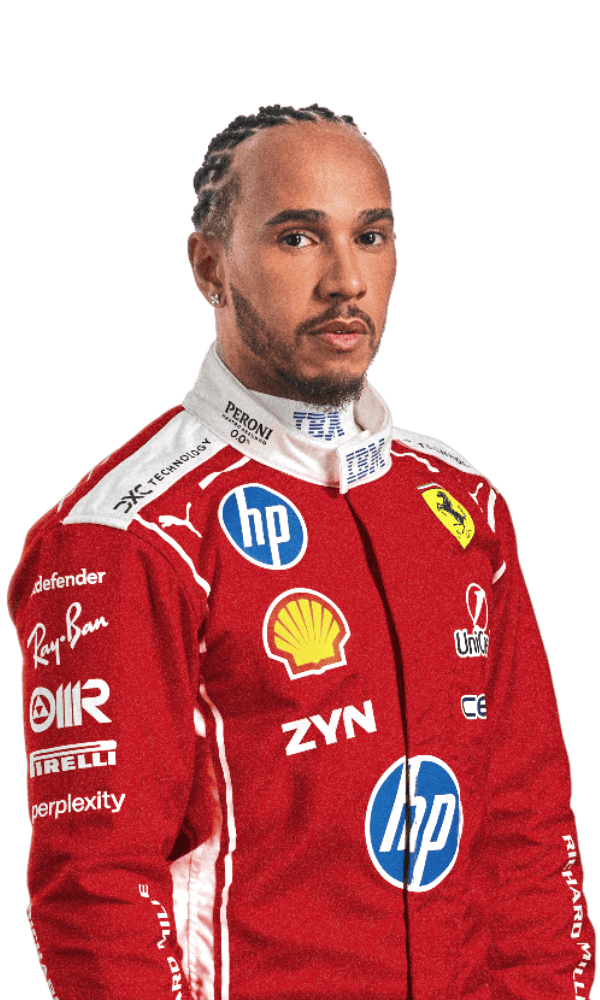
During the year, however, attention also turned to a major change in the driver line-up. Ferrari announced the signing of seven-time world champion Lewis Hamilton, who left Mercedes after 12 seasons. The British driver replaced Carlos Sainz alongside Charles Leclerc.
Lewis Hamilton’s arrival was among the most closely followed driver moves in Formula 1 history. Ferrari entered the 2025 season aiming to build on the previous campaign, in which it had come close to winning the constructors’ title.
From the opening races, however, the new SF-25 was unable to challenge the pacesetting McLaren consistently. Hamilton also struggled to adapt his driving style to the new car, while Leclerc regularly ran ahead of his team-mate despite the problems.
The first significant success came in the sprint at the Chinese Grand Prix, where Hamilton took pole position and then victory. The main race, however, ended with both Ferrari drivers being disqualified. Hamilton’s car breached the rules on plank wear, while Leclerc’s car was underweight.
Charles Leclerc delivered Ferrari’s best results during the season. He secured the team’s first podium finish of 2025 at the Saudi Arabian Grand Prix and finished on the podium seven times in total. His best results were second places in Monaco and Mexico.
Despite several fourth places, Hamilton failed to reach the podium in a main race. The 2025 season therefore became the first of his Formula 1 career without a single Grand Prix podium finish.
Ferrari also failed to win a single main race. The car’s shortcomings and the growing gap to its rivals led the team to divert some of its development resources towards preparing the next generation of cars.
Ferrari ended the 2025 season fourth in the constructors’ championship with 398 points. Charles Leclerc finished fifth in the drivers’ standings with 242 points, while Lewis Hamilton was sixth with 156.
The result represented a significant decline from the previous year, when the team had fought for the title until the final race. Ferrari’s wait to add to its collection of constructors’ titles thus continued after 17 years.
Despite the long wait for further championship success, Ferrari remained the most successful team in Formula 1 history at the end of the 2025 season. With 15 drivers’ and 16 constructors’ titles, it retained the record it had built over several generations, from Alberto Ascari’s first victories through the Niki Lauda era to Michael Schumacher’s dominance.
