
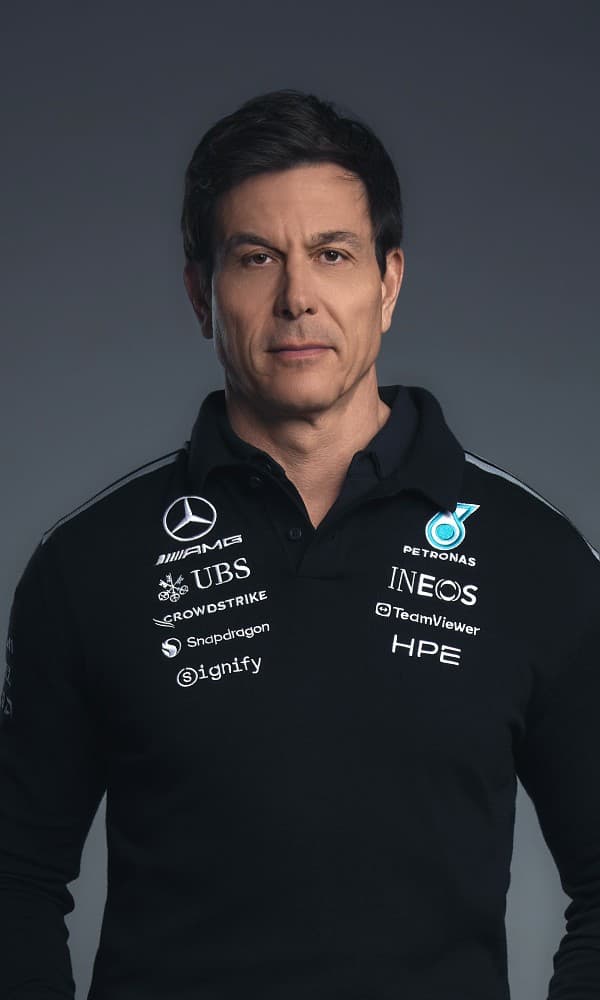
TotoWolff
Team principal
Started

 Mercedes-AMG Petronas
Team principal
Started
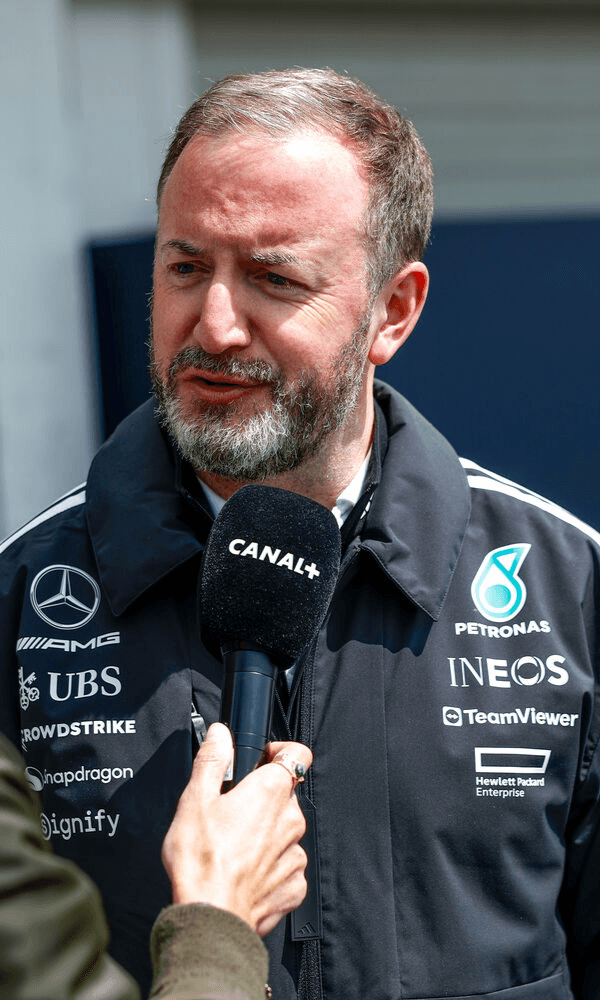
Deputy Team Principal
Started
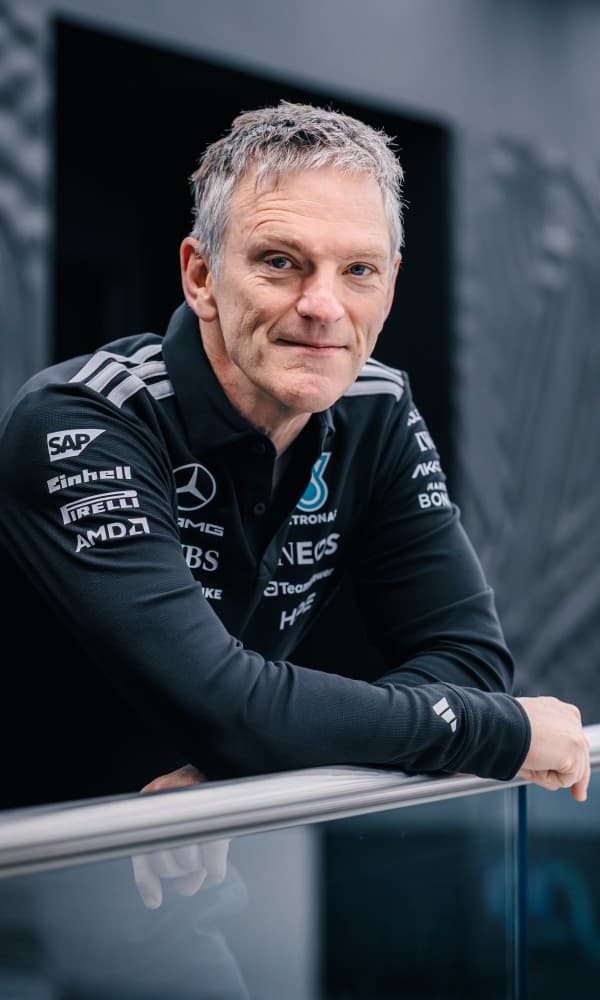
Technical director
Started
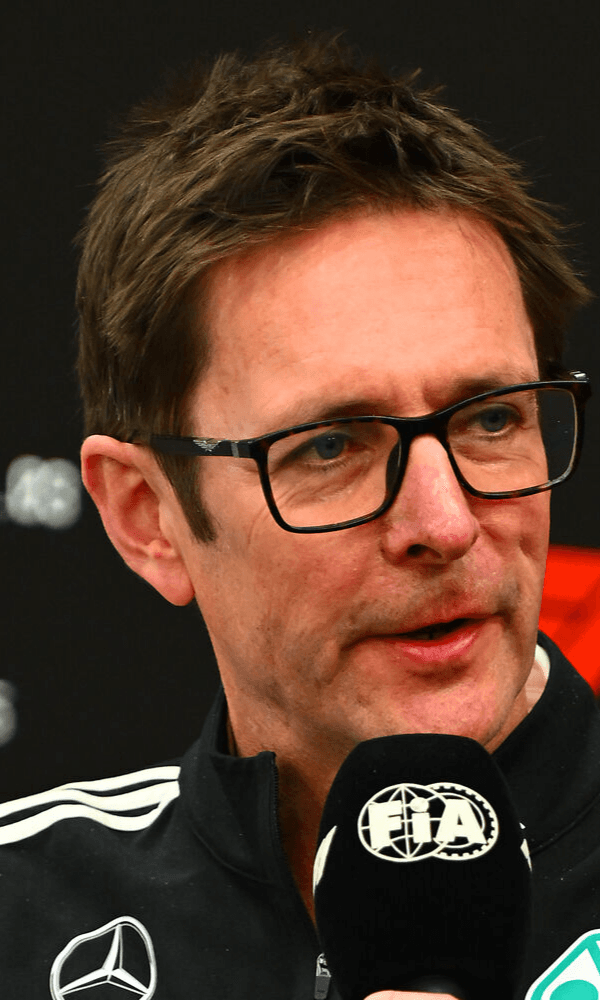
Head of Track Engineering
Started
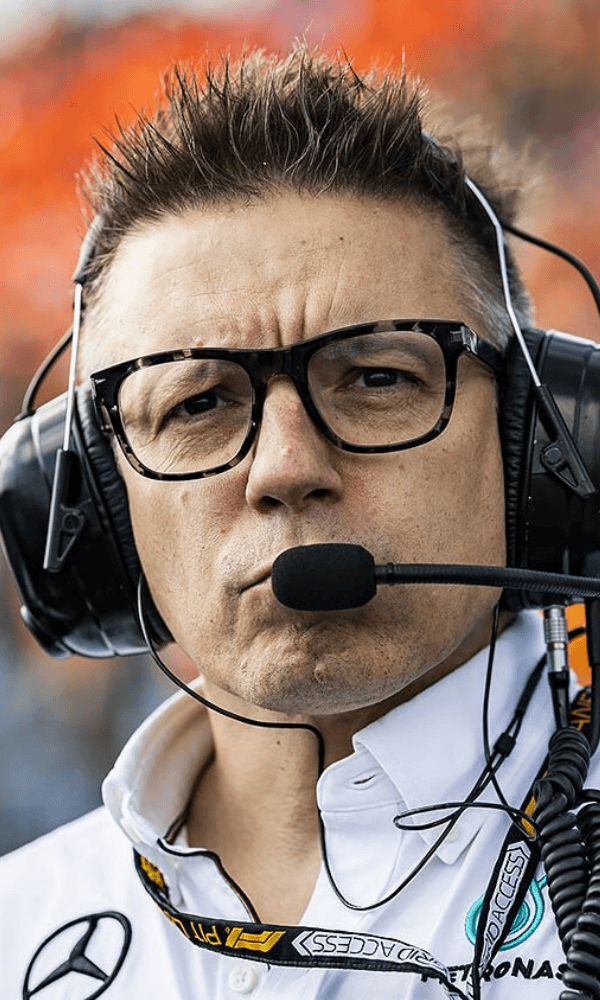
Race engineer
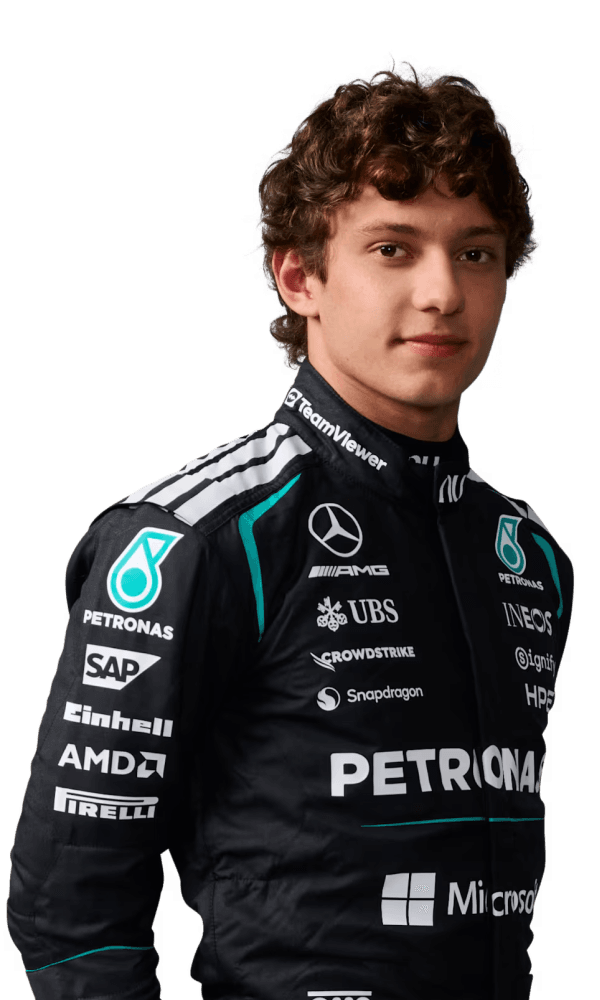
Kimi Antonelli
Started
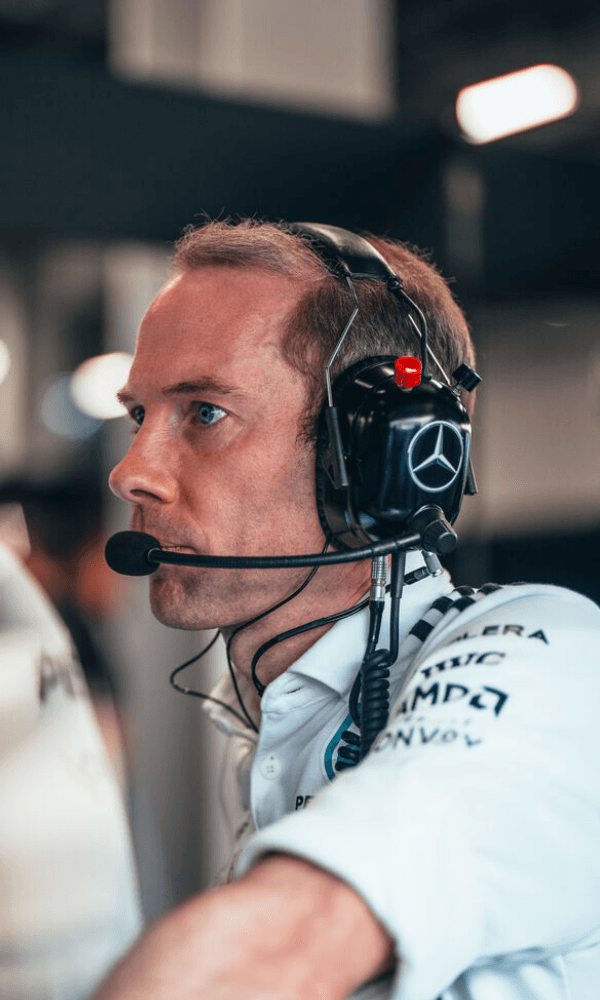
Race engineer
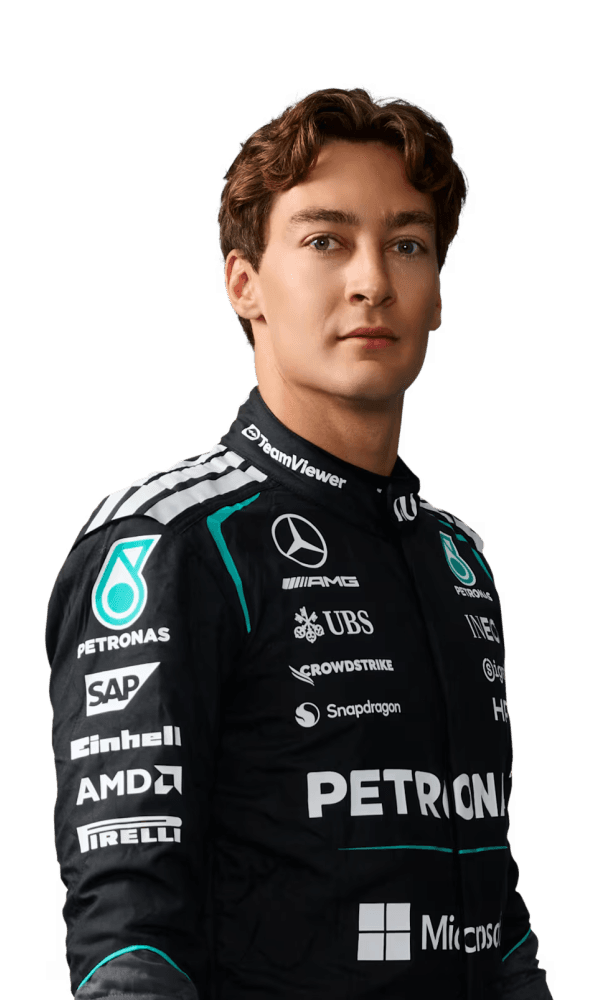
George Russell
Started
Mercedes has an unusual history in Formula 1: it spent most of the championship’s existence absent as a works team, yet still managed to shape two entire eras. The first time, it needed just two seasons; the second required several years of patient building before it established one of the most dominant dynasties the championship has ever seen.
More than half a century separates Juan Manuel Fangio and Lewis Hamilton, yet both became the faces of the same ambition. Mercedes did not enter Formula 1 simply to make up the numbers. In the 1950s, it arrived with a technical advantage that almost immediately made it the benchmark. After returning in 2010, it needed more time, but the outcome was similar: eventually, it set the direction for the entire sport.
Mercedes-Benz entered the Formula 1 World Championship in 1954, but it was no newcomer to grand prix racing. The marque already had a rich racing heritage stretching back to the interwar years, and the Silver Arrows name had long symbolised speed, engineering precision and lofty ambitions.
Mercedes brought the W196 into this new era and put Juan Manuel Fangio behind the wheel. The Argentinian was already one of motorsport’s leading figures, and at Mercedes he found machinery perfectly suited to his abilities. He won the world championship in 1954 and retained it the following year.
In 1955, he was joined by Stirling Moss, another of the great names of his generation. Mercedes had an exceptional driver pairing, and everything suggested it could establish a lasting dynasty. Instead, its campaign came to an abrupt end. The 1955 Le Mans 24 Hours disaster, which killed Pierre Levegh and dozens of spectators, shook the whole of motorsport. Mercedes ended its works racing programme at the end of the season, leaving Formula 1 while still dominating on track.
Although the marque disappeared from the list of constructors for decades, it did not vanish from Formula 1 entirely. It later returned as an engine supplier, most notably through its association with McLaren. That partnership delivered titles for both Mika Häkkinen and Lewis Hamilton, but it was still not a works team of its own.
That team began to take shape in Brackley, England. Today’s Mercedes traces its lineage through Tyrrell, BAR and Honda. When the Japanese manufacturer withdrew from Formula 1 after the 2008 season, the team’s future was uncertain. At the crucial moment, the organisation was taken over by Ross Brawn, one of the architects of Michael Schumacher’s success at Ferrari.
Brawn GP was born, and one of the most improbable stories in championship history followed. A team that had been fighting for its very survival shortly before the season won both world titles in 2009. Jenson Button became world champion and Brawn GP won the constructors’ championship. Mercedes saw the successful outfit as the ideal foundation for the return of its own team and bought it ahead of the 2010 season.
After 55 years, the Silver Arrows were back.
The new Mercedes arrived with a driver line-up that immediately attracted attention. The young Nico Rosberg was joined by Michael Schumacher, the seven-time world champion who had decided to return after three years away from Formula 1.
Results, however, fell short of expectations. Schumacher could no longer reproduce the dominance of his Ferrari years, while Mercedes itself was not yet ready to fight regularly for victories. Its early seasons were instead a period of building its technical infrastructure, recruiting leading specialists and gradually assembling a team capable of challenging for titles in the future.
The first major breakthrough came in 2012. Rosberg won the Chinese Grand Prix, securing Mercedes’ first victory as a works team since 1955. A few months later, Schumacher retired for good, with Lewis Hamilton taking his place.
At the time, the move looked bold. Hamilton had an established home at McLaren and a world title to his name, while Mercedes had won only one race since its return. Niki Lauda played an important role in his decision, and Toto Wolff joined the team’s leadership around the same time. The group that would soon dominate Formula 1 was gradually coming together.
Ahead of the 2014 season came one of the biggest technical changes in modern Formula 1. Naturally aspirated engines were replaced by complex turbo-hybrid power units, and Mercedes was better prepared for this new world than its rivals.
The impact was immediate. The team won 16 of the 19 grands prix, Hamilton claimed the world title and Rosberg finished second. Mercedes also won the constructors’ championship for the first time. One dominant season soon became a sustained reign.
Initially, Hamilton’s biggest rival was the man in the other Mercedes. Rosberg and Hamilton had known each other since their junior racing days, but the title fight gradually changed their relationship. Hamilton triumphed in 2014 and 2015, but Rosberg refused to give up and beat his team-mate in 2016. Shortly after securing his only world championship, he announced his retirement.
Valtteri Bottas became his successor. Although the Finn never won the title, for five years he consistently won races and scored points that were crucial to the constructors’ championship campaigns. Hamilton, meanwhile, continued his record-breaking run, winning titles with Mercedes in 2017, 2018, 2019 and 2020.
Adding his triumphs in 2014 and 2015, he won six drivers’ titles for Mercedes. Together with his McLaren crown, that took him to seven, matching Michael Schumacher.
Mercedes’ dominance was not simply the result of one exceptional engine or one driver. The power units produced by Mercedes High Performance Powertrains offered an enormous competitive advantage, particularly at the start of the hybrid era, but the team’s success had broader foundations.
Its technical leadership was shaped over time by figures such as Paddy Lowe, James Allison and Andy Cowell. Toto Wolff created a management model that brought hundreds of people in Brackley and Brixworth together into an exceptionally effective organisation. Mercedes could respond to regulation changes, address its own weaknesses and produce a title-contending car year after year.
The result was eight consecutive constructors’ championships from 2014 to 2021. Mercedes drivers also won all seven world titles between 2014 and 2020: six for Hamilton and one for Rosberg. Formula 1 had seen dominant teams before, but few had maintained such a level throughout an entire technical cycle.
The 2021 season was no longer a comfortable continuation of the previous years. Red Bull and Max Verstappen became equal rivals, and the title fight went all the way to the final race in Abu Dhabi. Verstappen won the drivers’ title, but Mercedes claimed the constructors’ championship once more, completing a record run of eight triumphs.
A year later, the technical regulations changed, and so did the team’s position. Mercedes introduced a radical concept with its W13, but the car was plagued by problems and could not match the performance of the previous generation.
It was in 2022 that George Russell, a long-standing member of Mercedes’ junior programme, joined Hamilton. He took victory in São Paulo in his first season, showing that he could become one of the key figures in the team’s future.
The following years were defined by the search for a route back to the top. Mercedes was no longer a team that automatically expected victories. After years of dominance, it once again found itself having to catch its rivals and understand new regulations before it could set the pace again.
Lewis Hamilton’s partnership with Mercedes ultimately lasted twelve seasons. Together, they forged one of the most successful driver-team combinations in motorsport history, but they parted ways after the 2024 season. Hamilton moved to Ferrari, and for the first time since 2013, Mercedes began a season without the driver who had become central to its modern identity.
It did not look among the experienced champions for a replacement. Instead, it put the young Andrea Kimi Antonelli, one of the brightest talents in its junior programme, in the car. George Russell and Kimi Antonelli therefore formed its driver line-up from 2025, a pairing that continues into the 2026 season.
Russell naturally assumed the role of the more experienced driver and team leader, while Antonelli represents a long-term investment in the future. For Mercedes, this is another generational change, similar to those that accompanied the transitions from Schumacher to Hamilton and from Rosberg to Bottas.
The 2026 season brought Formula 1 a new generation of technical regulations and power units. Such moments always offer teams the opportunity to transform their competitive position, and Mercedes has its own experience of these turning points. It was meticulous preparation for the technical revolution of 2014 that paved the way for its greatest dynasty.
This time, however, it enters the new era from a different position. It no longer needs to prove it can win. Its past is convincing enough on that front. The challenge is to build a team once again that does not merely react to the best, but sets the standard its rivals must chase.
Russell and Antonelli are the drivers for this new chapter. One must prove he can lead a championship-winning project over the long term; the other must show whether the talent in which Mercedes has invested for years can develop into a future champion.
Mercedes differs from most of Formula 1’s great teams in that its history is not continuous. Its first works era lasted just two seasons. A break of more than fifty years followed before the marque returned through an organisation that had previously raced under the Tyrrell, BAR, Honda and Brawn names.
Nevertheless, there is a clear thread linking Fangio’s W196 and Hamilton’s hybrid cars. In both periods, Mercedes combined exceptional drivers with technical preparation that allowed it to get ahead of the competition. Fangio established the first Silver Arrows legend; Hamilton became the face of the second. Schumacher helped lay its foundations, Rosberg took its internal rivalry to its peak, and Bottas became an important part of the period in which Mercedes rewrote the record books.
Today, Russell and Antonelli occupy the cockpits. They carry the name of a team that has twice worked out how to win before everyone else. The question for the third Silver Arrows era is therefore not whether Mercedes knows the way to the top, but whether it can find it once again.
