
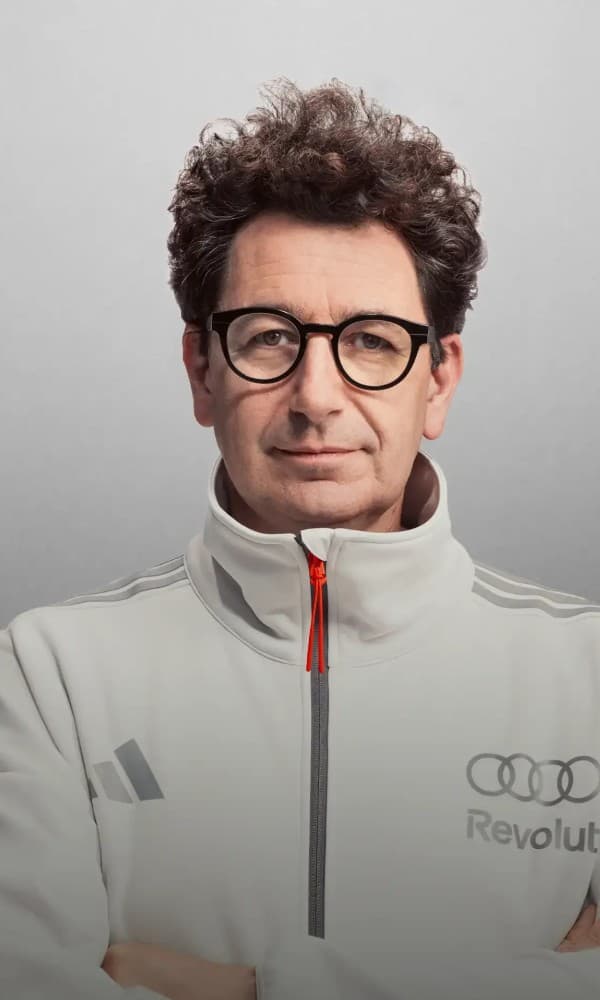
MattiaBinotto
CEO
Started
 Audi Revolut F1 Team
CEO
Started

Technical director
Started
Racing director
Started

Race engineer
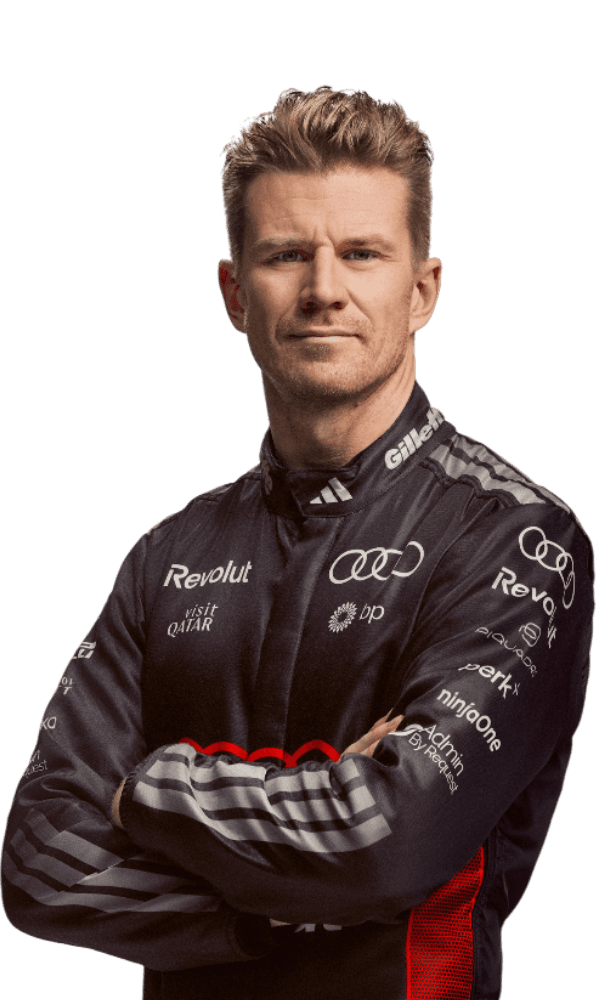
Nico Hülkenberg
Started
Race engineer
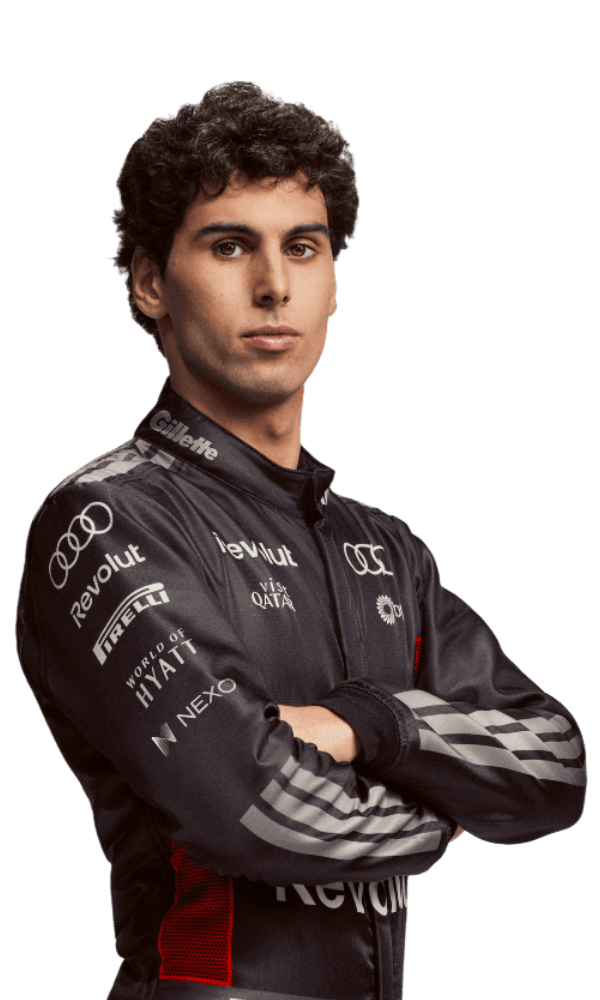
Gabriel Bortoleto
Started
Audi did not buy an empty factory for its Formula 1 entry, but a Swiss team with more than 30 years of history and a Grand Prix victory to its name. The German manufacturer announced its arrival in the championship in 2022 and chose Sauber, which had competed in Formula 1 since the 1993 season, as the foundation for its future works team. Its greatest success came in 2008, when Robert Kubica won the Canadian Grand Prix. Audi subsequently began investing in the development of its own power unit, technical facilities and personnel. By the end of the 2025 season, however, it had yet to contest an F1 race under its own name. Sauber’s final season before the planned transition to Audi brought Nico Hülkenberg’s first podium and ninth place in the constructors’ championship.
The history of the team that became the foundation of the Audi F1 project stretches back to the early 1970s. Swiss businessman Peter Sauber founded his own racing organisation and gradually made his mark, particularly in sports car racing. He achieved significant success in partnership with Mercedes, winning the Le Mans 24 Hours in 1989.
Sauber entered Formula 1 in 1993. Its debut at the South African Grand Prix brought an immediate points finish, with Finnish driver JJ Lehto taking fifth place. His team-mate was Austrian Karl Wendlinger.
The Swiss outfit gradually established itself in the midfield. During its early years, it worked with several engine manufacturers, including Mercedes and Ferrari. Its drivers also included Heinz-Harald Frentzen, Jean Alesi and Felipe Massa.
The 2001 season was particularly successful, as Sauber finished fourth in the constructors’ championship with Nick Heidfeld and Kimi Räikkönen. The young Finn’s performances caught the attention of McLaren, which he joined the following season.
A major change came in 2005, when Peter Sauber decided to sell a majority stake in the team to BMW. The German manufacturer took control and began competing in Formula 1 as BMW Sauber F1 Team from the 2006 season.
The new ownership brought substantial investment in technical facilities and car development. Results steadily improved, and in 2007 the team finished second in the constructors’ championship following McLaren’s exclusion from the standings.
The high point came at the 2008 Canadian Grand Prix, where Robert Kubica secured the team’s first Formula 1 victory. The Polish driver capitalised on a dramatic race in Montreal to win ahead of team-mate Nick Heidfeld. BMW Sauber thus secured its first and only one-two finish.
Kubica even moved into the lead of the drivers’ championship after the race. The team ultimately finished the season third in the constructors’ championship.
After a less competitive 2009 season, BMW decided to withdraw from Formula 1. Peter Sauber subsequently bought the team back, and it continued under his name again from 2010.
Following BMW’s departure, Sauber once again had to operate on a more limited budget. Nevertheless, it was occasionally able to challenge much larger teams.
A notable breakthrough came in 2012. Mexican Sergio Pérez claimed three podium finishes, while his team-mate Kamui Kobayashi finished third at his home Japanese Grand Prix. Sauber ended the season sixth in the constructors’ championship.
Performance gradually declined in the seasons that followed, however. The team faced financial difficulties and was taken over in 2016 by investment company Longbow Finance, linked to Sweden’s Rausing business family. This marked the end of Peter Sauber’s involvement in the team’s ownership and management.
A partnership with Alfa Romeo, which began in 2018, provided fresh impetus. A year later, the team was competing as Alfa Romeo Racing, although its technical facilities and organisational structure remained part of Sauber.
World champion Kimi Räikkönen became one of the team’s leading figures, returning in 2019 to the outfit where he had begun his career. Following his departure, Valtteri Bottas took over as its experienced leader, with Chinese driver Zhou Guanyu joining him from the 2022 season.
The best result during the Alfa Romeo partnership was sixth place in the constructors’ championship in 2022. The partnership ended after the 2023 season, by which time it was already known that Sauber was preparing for Audi’s arrival.
From 2024, the team competed as Stake F1 Team Kick Sauber. The final period before the transformation brought difficulties on track, however. The outfit scored just four points in 2024, courtesy of Zhou Guanyu’s eighth place at the Qatar Grand Prix, and finished last in the constructors’ championship.
The decisive moment in the history of the future Audi F1 team came on 26 August 2022. During the Belgian Grand Prix weekend, the German manufacturer officially announced that it would enter Formula 1 from the 2026 season, when new technical regulations for power units would come into force.
Audi had enjoyed success in endurance racing, rallying and Germany’s DTM championship. Until then, however, it had never competed in Formula 1 as a constructor in its own right.
The decision to enter the championship was driven primarily by the new generation of hybrid power units. These were set to use a greater proportion of electrical power and advanced sustainable fuels, aligning with the manufacturer’s technological direction.
In October 2022, Audi announced that Sauber would become its strategic partner. The Swiss outfit would be responsible for developing and manufacturing the cars, while Audi began building its own engine programme in Neuburg an der Donau, Germany.
From the outset, the project therefore envisaged two main technical centres. Chassis and aerodynamic development, along with the day-to-day running of the race team, remained in Hinwil, while development of the internal combustion engine, electrical components and other parts of the power unit took place in Germany.
Audi had not simply decided to supply engines to an existing team. The aim was to create a fully fledged works outfit with control over the development of both the car and its power unit.
In March 2024, the manufacturer announced its decision to take full ownership of Sauber. It later secured another major investment partner, Qatar’s sovereign wealth fund, the Qatar Investment Authority, which agreed to acquire a significant minority stake in the project.
These steps laid the financial and organisational foundations for the German manufacturer’s entry into Formula 1.
Preparations for Audi’s entry into the championship were accompanied by extensive personnel changes. The manufacturer gradually recruited experienced specialists who had previously worked for leading Formula 1 teams.
One of the most significant arrivals was Mattia Binotto, the former Ferrari team principal. The Italian engineer joined the project in August 2024, taking responsibility for its technical and operational management. He replaced the previous leadership, which included Andreas Seidl and Oliver Hoffmann.
Binotto brought more than two decades of experience at Ferrari, where he had progressed through technical and management roles. He led the Italian outfit as team principal from 2019 to 2022.
Another major appointment was Jonathan Wheatley, who had spent many years at Red Bull Racing. The Briton had contributed to the team’s success during the championship-winning eras of Sebastian Vettel and Max Verstappen.
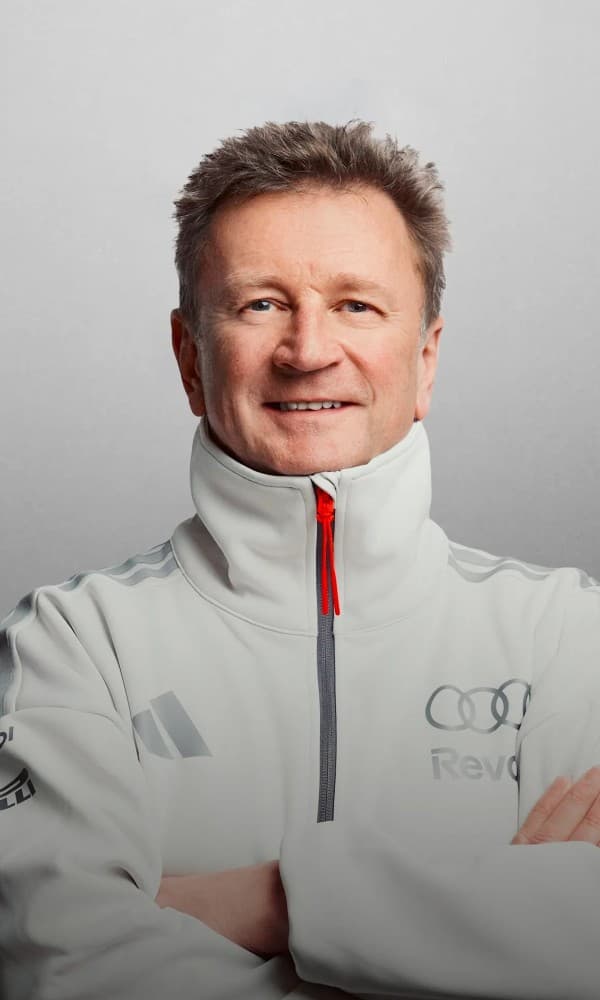
Wheatley joined Sauber in April 2025 as team principal. His primary responsibilities were race operations and the day-to-day running of the team during Grands Prix.
In May 2025, Audi revised the project’s organisational structure. Binotto became head of the entire Audi F1 programme, while Wheatley remained responsible for running the team at the circuits.
Recruiting new drivers was another important part of the preparations. Audi opted for a combination of experience and young talent, choosing Nico Hülkenberg and Gabriel Bortoleto for its future works team.
Hülkenberg returned to Sauber ahead of the 2025 season after a spell at Haas. The German also had experience with Williams, Force India and Renault, making him an important addition as the new project developed.
His team-mate was Brazilian rookie Gabriel Bortoleto, who had won the Formula 3 title in 2023 and then the Formula 2 championship in 2024 before stepping up to Formula 1.
The final season before the planned switch to the Audi name brought a marked improvement in Sauber’s results. The team entered 2025 after an exceptionally difficult previous year, in which it had scored just four points and finished last in the constructors’ championship.
The new C45 still used Ferrari power units. Sauber therefore had to focus not only on developing its current car, but also on preparing the technical infrastructure for Audi’s own engine programme.
The season began with an encouraging seventh place for Nico Hülkenberg at the Australian Grand Prix. In the following races, however, the team struggled to score points regularly and remained in the lower half of the field.
A series of technical upgrades improved its competitiveness. Hülkenberg scored points in Spain, Canada and Austria, with his greatest success coming at the British Grand Prix.
In a rain-hit race at Silverstone in 2025, Nico Hülkenberg claimed his first Formula 1 podium. The German started down in 19th, but an excellent performance and well-judged strategy helped him work his way up to third.
Hülkenberg reached the podium on his 239th Grand Prix start, ending his long wait for the achievement. It was Sauber’s first podium finish since the 2012 Japanese Grand Prix, where Kamui Kobayashi had finished third.
Gabriel Bortoleto also made important progress. The Brazilian rookie scored his first points at the Austrian Grand Prix and achieved his best result of the season in Hungary, where he finished sixth.
Bortoleto steadily improved his qualifying and race performances, breaking into the top 10 on several occasions during the season. His results confirmed the potential of a driver Audi had included in its long-term plans.
Sauber ended the 2025 season ninth in the constructors’ championship with 70 points. Hülkenberg scored 51 points to finish 11th in the drivers’ standings, while Bortoleto contributed 19.
Although the result left the team second from bottom, it represented a significant improvement on the previous season. Sauber scored 66 more points and returned to the podium after 13 years.
Alongside Sauber’s final season, preparations continued for Audi’s entry into Formula 1. The manufacturer steadily expanded its technical facilities, recruited new specialists and worked on integrating car and power unit development.
While chassis and aerodynamic development continued in Hinwil, Switzerland, the new hybrid engine was taking shape in Neuburg an der Donau. Audi also began establishing another technical facility in Bicester, Britain, intended to make it easier to recruit Formula 1 specialists.
A significant moment came in November 2025, when Audi unveiled the Audi R26 Concept in Munich. The car showcased the core visual identity of the forthcoming team, combining silver, black and red.
This gave the public its first glimpse of how Audi’s Formula 1 project would look. The concept was not the final race car, however, but primarily a design showcase for the new identity.
The next step followed in December 2025, when the official name, Audi Revolut F1 Team, was unveiled. Financial technology company Revolut became the incoming team’s title partner.
By the end of 2025, Audi had therefore completed the most important organisational steps required to transform Sauber. The team had a new leadership structure, a confirmed driver line-up, expanded technical facilities and its own power unit development programme.
From a sporting history perspective, however, it was important to distinguish between Sauber’s achievements and Audi’s new venture. By the end of the 2025 season, the German manufacturer had yet to record a Formula 1 start, victory or world title under its own name.
Robert Kubica’s historic 2008 victory, Sergio Pérez’s podium finishes and Nico Hülkenberg’s success at Silverstone in 2025 belonged to the history of Sauber, on whose foundations Audi was building its works team.
Combining the Swiss racing organisation’s experience with the German manufacturer’s technical and financial resources was the central premise of the ambitious project. The end of the 2025 season thus closed a chapter spanning more than 30 years of Sauber history and marked the completion of preparations for its transformation into Audi F1.
