
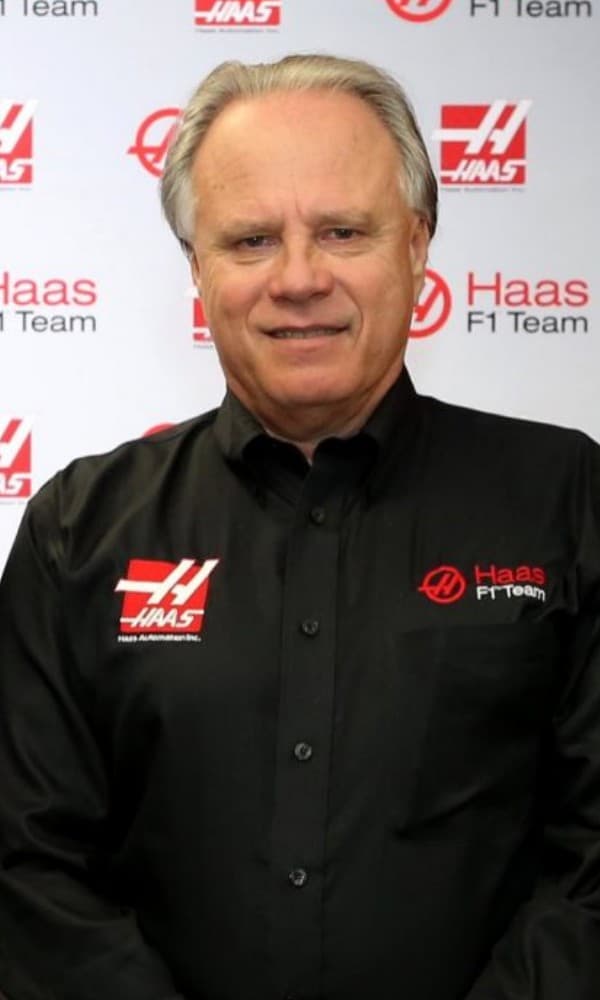
GeneHaas
CEO
Started
 Haas F1 Team

CEO
Started
Team principal
Started
Technical director
Started
Race engineer
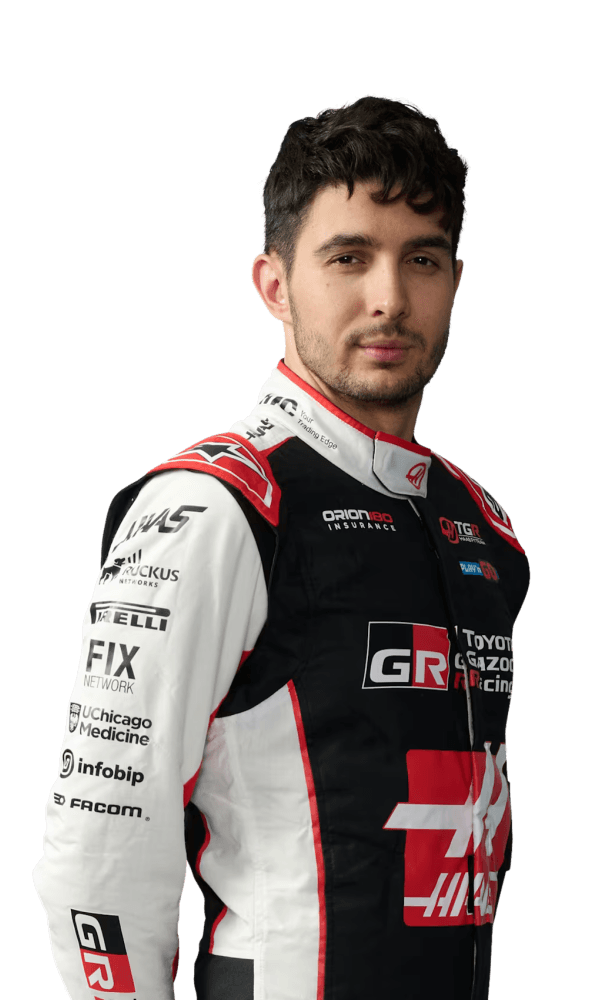
Esteban Ocon
Started
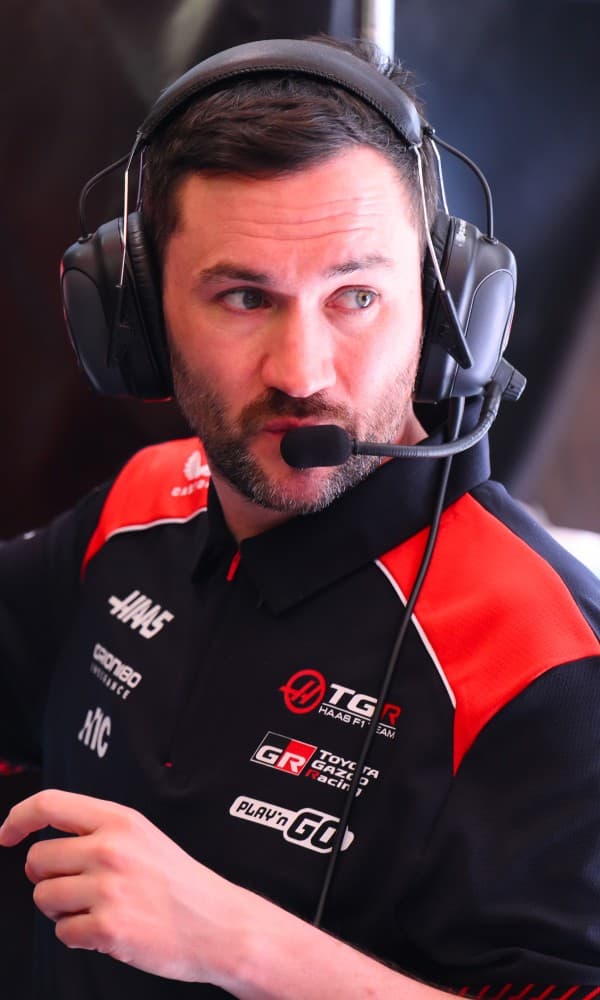
Race engineer
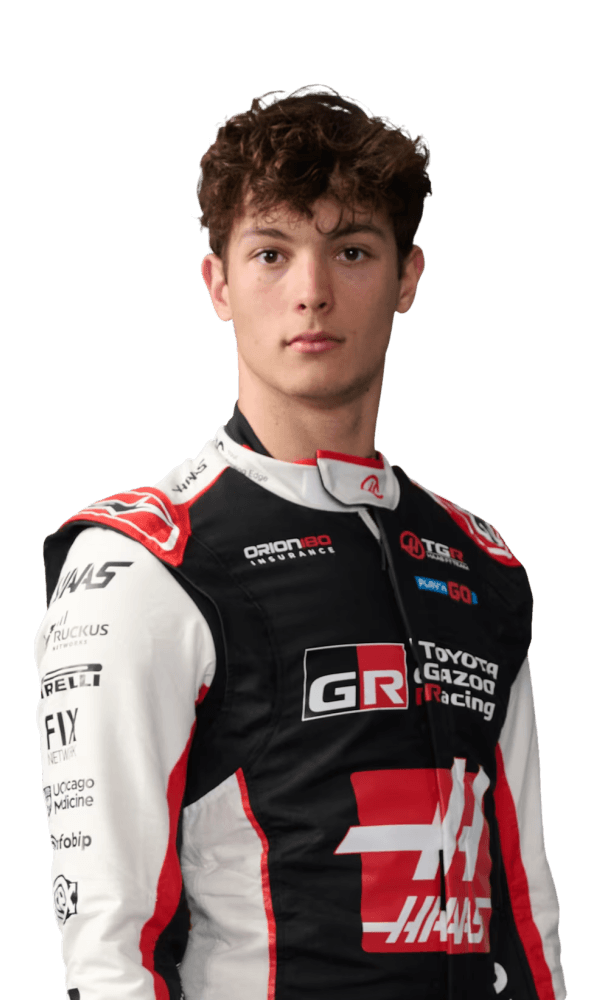
Ollie Bearman
Started
Haas began its Formula 1 history with sixth place in Australia, but its first decade also brought a scoreless season, an unexpected pole position and a change of long-serving team principal. The American team, founded by businessman Gene Haas, entered the championship in 2016 and gradually established itself on the Formula 1 grid. Its greatest success came in 2018, when it finished fifth in the Constructors’ Championship. Romain Grosjean, Kevin Magnussen and Günther Steiner became key figures in its history, with Steiner replaced at the helm by Ayao Komatsu in 2024. By the end of the 2025 season, Haas had yet to claim a race win or podium finish, but its new driver pairing of Esteban Ocon and Oliver Bearman helped it achieve its highest-ever points total.
Editorial clarification to the introduction: The 79 points scored in 2025 represented the second-highest total in Haas’s history, not a record. The team scored its most points (93) in 2018. The relevant wording therefore needs to be amended in both introductory passages.
The story of Haas F1 Team began in 2014, when motorsport’s governing body, the FIA, approved the new American team’s entry into the world championship. Behind the project was businessman Gene Haas, founder of Haas Automation and co-owner of the successful Stewart-Haas Racing team in the American NASCAR series.
Gene Haas decided to build a team that operated differently from most traditional outfits. Rather than developing and manufacturing every component in-house, Haas relied on external partners from the outset.
Ferrari became a key supplier, providing power units, gearboxes and other permitted components. Italian company Dallara took on a significant role in designing and manufacturing the cars.
The American team established its headquarters in Kannapolis, North Carolina, with a European base in Banbury, Britain. Günther Steiner was appointed to lead the new outfit, an experienced manager who had previously worked in Formula 1 at Williams and Jaguar before becoming involved in Red Bull’s motorsport activities.
Haas thus became the first new American-led Formula 1 team in around 30 years. Its aim was to build a competitive outfit capable of operating with fewer technical resources than the major manufacturers.
Haas contested its first Formula 1 race at the 2016 Australian Grand Prix. Experienced French driver Romain Grosjean and Mexico’s Esteban Gutiérrez took the wheel of its VF-16 cars.
Its very first race brought an unexpected success. Grosjean capitalised on sound strategic decisions and delivered an excellent performance to finish sixth. Haas therefore scored eight Constructors’ Championship points on its debut.
An even better result followed two weeks later. Grosjean finished fifth at the Bahrain Grand Prix, confirming that the new American team could compete with established midfield outfits.
Haas ended its debut season eighth in the Constructors’ Championship with 29 points. All were scored by Grosjean, who became the team’s first standout driver.
Kevin Magnussen became his team-mate for the 2017 season. The Danish driver replaced Gutiérrez and formed a settled partnership with Grosjean that would represent Haas for the next four years.
In its second season, the team retained eighth place in the championship but increased its points tally to 47. Haas was gradually improving its car’s competitiveness and preparing for its most successful period.
Haas’s third year in Formula 1 brought a significant step forward in performance. The VF-18 was among the fastest cars in the midfield, and the team was regularly able to fight for top-10 finishes.
The season-opening 2018 Australian Grand Prix, however, brought major disappointment. Grosjean and Magnussen were running fourth and fifth, but both had to retire after problems securing their wheels during pit stops.
Haas nevertheless made its mark in the races that followed. Its biggest success came at the Austrian Grand Prix, where Romain Grosjean finished fourth and Kevin Magnussen fifth.
Fourth and fifth at the Red Bull Ring represented the best combined result for Haas’s drivers in a single grand prix. Grosjean’s fourth place also remained the team’s highest race finish through to the end of 2025.
Haas scored points regularly throughout the season and fought the works Renault team for fourth in the Constructors’ Championship. The American outfit ultimately finished fifth with 93 points.
It was Haas’s best-ever result, one the team was unable to surpass over the following seven seasons.
Much of the credit went to Günther Steiner, who had overseen the team’s operations, its collaboration with Ferrari and Dallara, and the gradual expansion of its technical department since its creation.
The success of 2018, however, remained the high point of the American team’s first phase of development. Its competitiveness began to decline sharply in the seasons that followed.
After its successful 2018 season, Haas entered a difficult period. The VF-19 struggled particularly with inconsistent tyre performance and was unable to convert strong qualifying results into race points on a regular basis.
The team ended the 2019 season down in ninth in the Constructors’ Championship with 28 points. There was a further decline in 2020, when Haas scored just three points.
The closing stages of the 2020 season were overshadowed by one of the most serious accidents in modern Formula 1 history.
At the Bahrain Grand Prix, Romain Grosjean struck the barriers at high speed shortly after the start. His car split apart on impact, and its front section was engulfed in flames.
The French driver managed to escape the burning car and survived the accident despite suffering burns to his hands. Modern safety features played a significant role in his survival, including the halo, which helped protect the cockpit area.
Grosjean did not take part in the remaining races of the season. Haas replaced him with test driver Pietro Fittipaldi, grandson of two-time world champion Emerson Fittipaldi.
Both Grosjean and Magnussen left the team at the end of the year. Haas opted for an entirely new driver pairing, signing Mick Schumacher, son of seven-time world champion Michael Schumacher, and Russian driver Nikita Mazepin.
The 2021 season became Haas’s worst in Formula 1. The team decided to focus its development resources on the new car for the following season and failed to score a single point throughout the championship.
Haas therefore finished last in the Constructors’ Championship, with Mick Schumacher’s 12th place at the Hungarian Grand Prix its best result.
Ahead of the 2022 season, Haas found itself in the spotlight following Russia’s invasion of Ukraine. The team ended its partnership with title sponsor Uralkali and also terminated Nikita Mazepin’s contract.
Kevin Magnussen made an unexpected return in his place, having previously raced for Haas from 2017 to 2020.
The Danish driver immediately delivered a notable result. He finished fifth at the season-opening 2022 Bahrain Grand Prix, securing the team’s first points after an entire season without scoring.
The biggest surprise, however, came towards the end of the year at the São Paulo Grand Prix.
In changeable conditions during Friday qualifying at Interlagos, Magnussen set the fastest time in the decisive Q3 session. Conditions deteriorated shortly afterwards, leaving his rivals unable to respond.
Kevin Magnussen had secured Haas’s first-ever Formula 1 pole position. The Danish driver subsequently started Saturday’s sprint race from first place.
Although he finished the sprint eighth and retired from Sunday’s grand prix following a collision with Daniel Ricciardo, his qualifying success remained one of the most significant moments in the American team’s history.
Haas scored 37 points in 2022 and finished eighth in the Constructors’ Championship.
The following year, the experienced Nico Hülkenberg replaced Mick Schumacher to partner Magnussen. That change, however, did not bring the anticipated progress.
The VF-23 suffered significant tyre wear problems, and its drivers were often unable to maintain strong qualifying positions during races. Haas ended the 2023 season last with just 12 points.
That failure ultimately led to a major change in the team’s leadership.
The start of 2024 brought one of the most significant personnel changes in Haas’s history. After eight seasons in Formula 1, Günther Steiner left his role as team principal, having helped establish the outfit and led its racing operations from the outset.
During his time at Haas, the Italian manager became one of the paddock’s best-known figures, thanks in part to his appearances in the documentary series Formula 1: Drive to Survive.
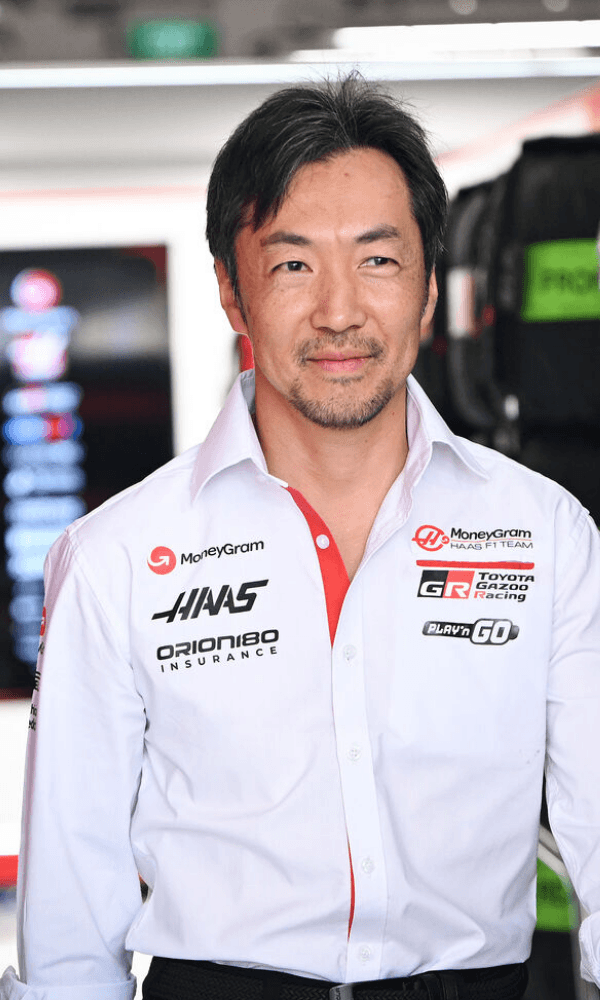
He was succeeded by Ayao Komatsu, a Japanese engineer who had been with the team since its debut in 2016. Before his promotion, he had served as director of engineering and had extensive experience of overseeing the technical side of race operations.
Komatsu focused on making the team more efficient, improving communication between its technical departments and resolving the problems that had limited its cars’ performance in previous seasons.
The first results emerged during the 2024 season. Haas significantly improved its tyre management, and drivers Nico Hülkenberg and Kevin Magnussen regularly fought for points.
Hülkenberg took sixth place at both the Austrian and British Grands Prix and qualified fourth for the season-ending Abu Dhabi Grand Prix.
Haas ended the 2024 season seventh in the Constructors’ Championship with 58 points. It climbed three places compared with the previous year and significantly increased its points tally.
Another important step was the announcement of a technical collaboration with Toyota Gazoo Racing in October 2024. The Japanese company became Haas’s technical partner and began contributing to technology development, component manufacturing and staff development.
The partnership was intended to allow Haas to expand its own technical capabilities while maintaining its long-standing collaboration with Ferrari, which continued to supply power units.
As part of its reorganisation, the team also opted for an entirely new driver line-up. Nico Hülkenberg moved to Sauber, while Kevin Magnussen left the race line-up at the end of the season.
Esteban Ocon and young British driver Oliver Bearman became Haas’s new drivers.
Haas entered the 2025 season with the VF-25 and an entirely new driver pairing. Esteban Ocon arrived from Alpine, where he had won the 2021 Hungarian Grand Prix, while Oliver Bearman embarked on his first full Formula 1 season.
The talented Briton was a member of Ferrari’s driver academy and had already gained experience with Haas in 2024, deputising for Kevin Magnussen at the Azerbaijan Grand Prix and then again in Brazil.
The start of the 2025 season was difficult for Haas. At the Australian Grand Prix, the team struggled with an unstable car and a lack of competitiveness, but it significantly improved its results at the next race in China.
Following the disqualification of both Ferrari drivers, Ocon finished fifth and Bearman eighth. Haas thus secured its first double points finish of the season and showed it could fight at the front of the midfield.
The car’s performance fluctuated over the subsequent grands prix, however. The team repeatedly found itself able to challenge stronger rivals in qualifying, only to lose pace during the races.
Significant progress came only in the second half of the year, when Haas introduced further technical upgrades.
Oliver Bearman delivered the biggest success at the 2025 Mexican Grand Prix, finishing fourth. The British driver started ninth but worked his way towards the front with an excellent performance and the right strategy.
Bearman thereby matched Haas’s best-ever result, previously held by Romain Grosjean from the 2018 season. Fourth place was also the best result of the young Briton’s career to date.
Esteban Ocon also scored in Mexico, finishing ninth. Haas therefore secured another significant points haul and strengthened its position in the Constructors’ Championship battle.
Bearman also produced strong performances in other races and became the team’s main source of points towards the end of the season. Despite his greater experience, Ocon was unable to consistently outperform his younger team-mate.
Haas ended the 2025 season eighth in the Constructors’ Championship with 79 points. Although it dropped one place compared with the previous year, it scored 21 more points.
The team’s most successful driver was Oliver Bearman, who scored 41 points and finished 13th in the overall standings. Esteban Ocon was 15th with 38 points.
It was the second-highest points total in Haas’s history, surpassed only by its record 2018 season. The result also underlined the gradual improvement in the team’s operations under Ayao Komatsu.
At the end of 2025, Haas also announced an expanded partnership with Toyota Gazoo Racing, which was set to become its title partner from the following season. The collaboration focused primarily on further technical development, testing and strengthening engineering capabilities.
By the end of the 2025 season, Haas had completed 10 Formula 1 campaigns, gradually establishing itself as a regular presence in the championship.
Although the American team had not claimed a victory, podium finish or championship title, it had achieved several results that ranked among the biggest surprises of their respective seasons.
From Romain Grosjean’s sixth place on debut in Australia, through fifth in the 2018 Constructors’ Championship, to Kevin Magnussen’s historic pole position in Brazil, Haas repeatedly proved capable of competing with teams boasting significantly greater technical resources.
It also endured a difficult period in which it struggled with a lack of competitiveness, financial constraints and major personnel changes.
Ayao Komatsu’s appointment to lead the team, the technical partnership with Toyota and the signing of Oliver Bearman represented the most significant steps in the latest phase of its development.
Haas therefore ended the 2025 season as an American team with its own organisational identity, a stable collaboration with Ferrari and an expanding technical operation. Although it had yet to establish itself as a regular podium contender, the results of the previous two seasons demonstrated significant progress from the most difficult period in its history.
