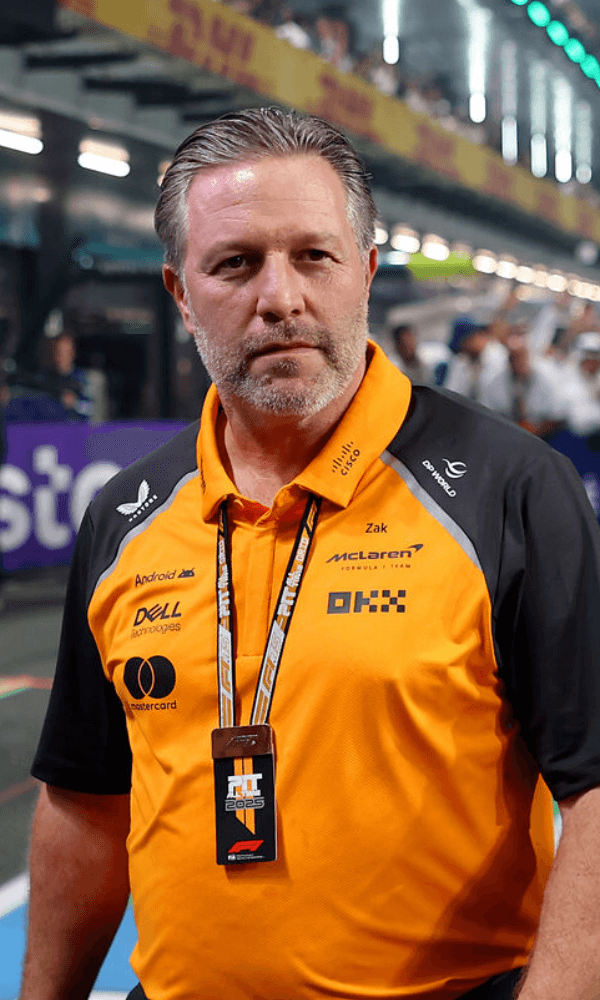
ZakBrown
CEO
Started
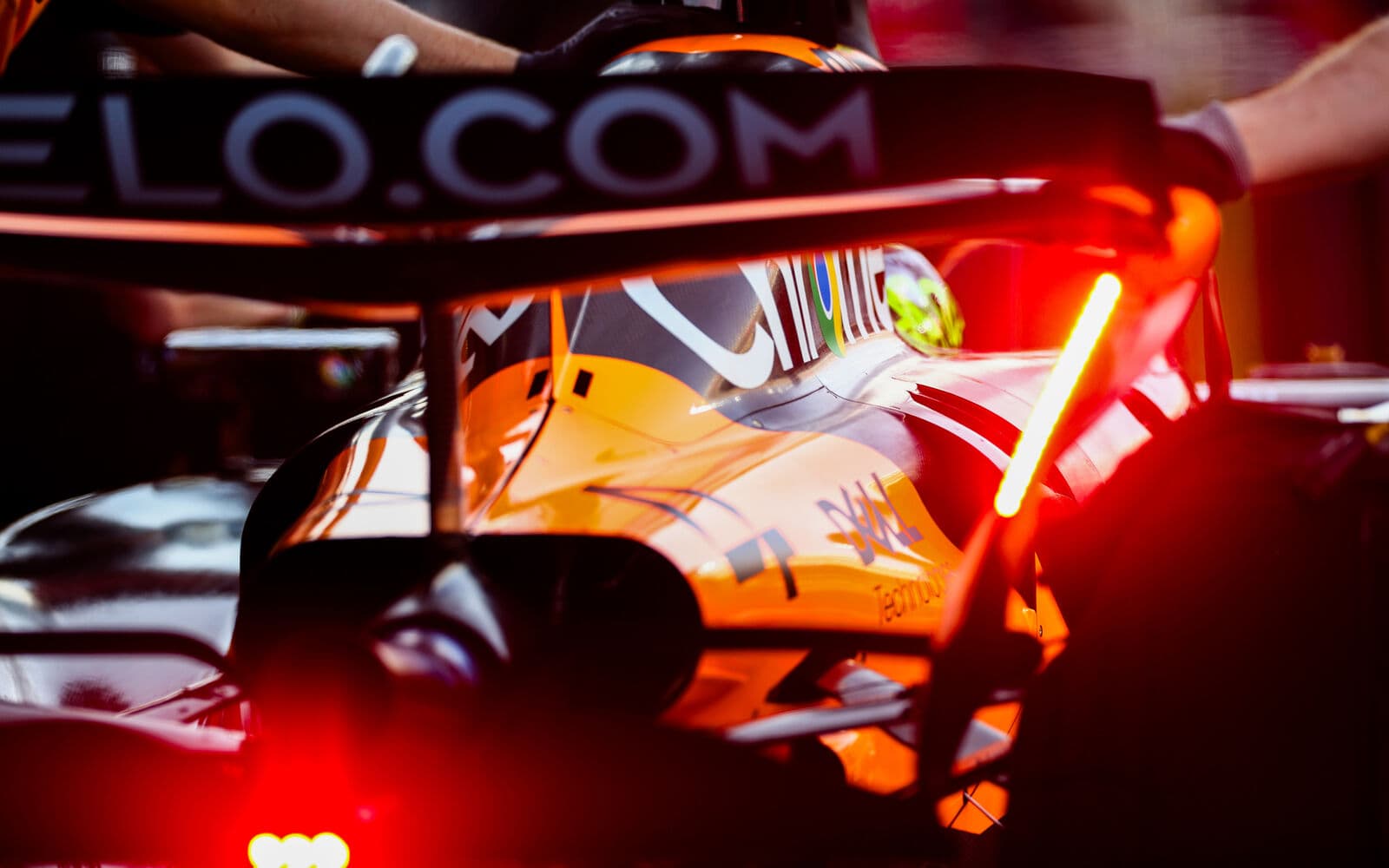
 McLaren Racing

CEO
Started
Team principal
Started
Chief Technical Officer & Chief Designer
Started
Chief Technical Officer, Aerodynamics
Started
Technical Director, Performance
Started
Technical Director, Applied Engineering
Started
Race engineer
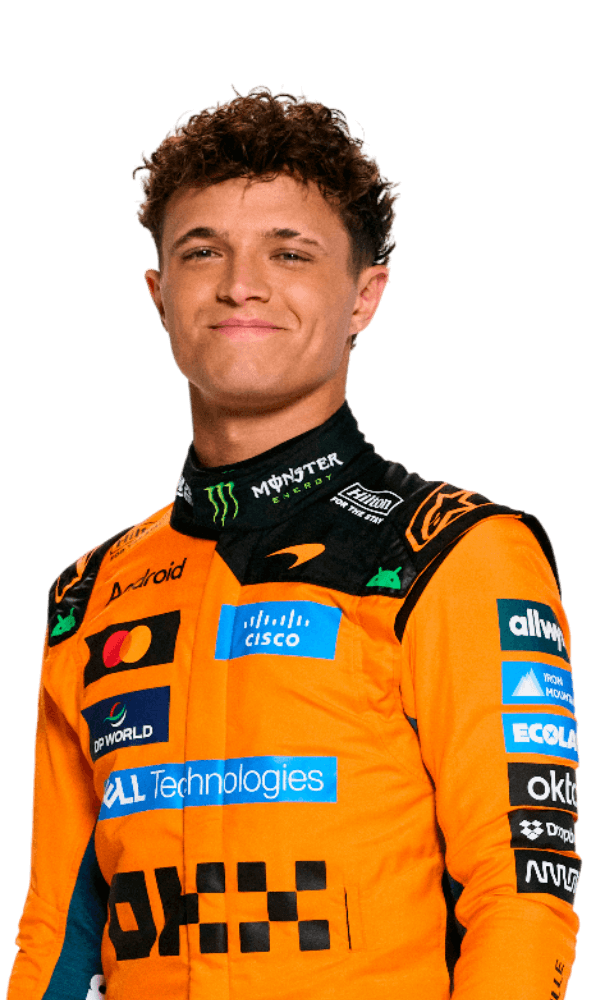
Lando Norris
Started
Race engineer
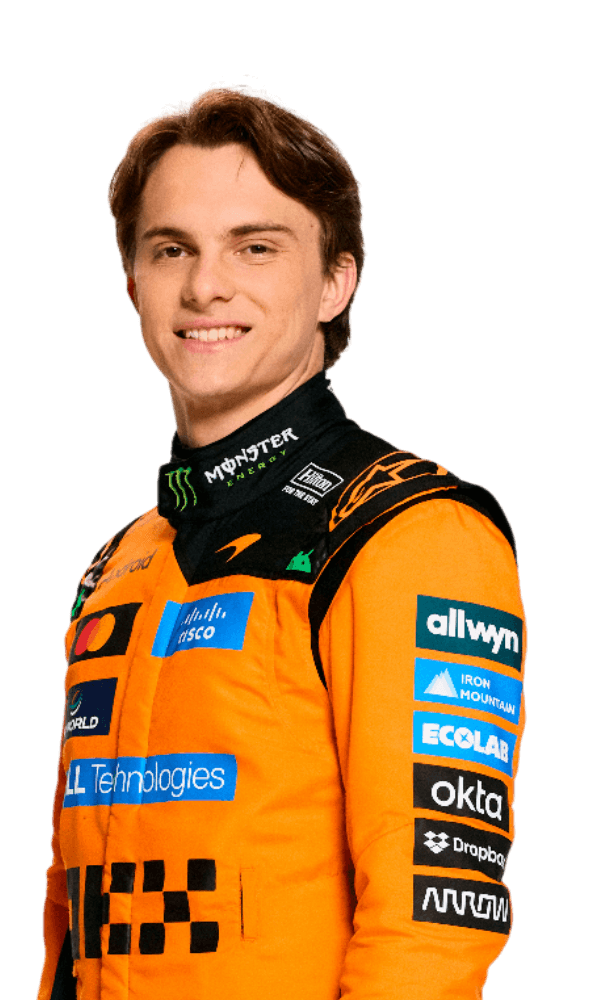
Oscar Piastri
Started
McLaren is one of the rare examples in Formula 1 history of a team founder winning a Grand Prix in a car bearing his own name. New Zealander Bruce McLaren achieved that feat in 1968, laying the foundations for one of the championship’s most successful teams. By the end of the 2025 season, the British outfit based in Woking had won ten constructors’ championships and thirteen drivers’ world titles. Ayrton Senna, Alain Prost, Mika Häkkinen and Lewis Hamilton helped shape its history, with Lando Norris and Oscar Piastri writing its latest successful chapter.
McLaren’s history began in 1963, when New Zealand racing driver Bruce McLaren founded his own racing organisation, Bruce McLaren Motor Racing. It entered Formula 1 in 1966, making its debut at the Monaco Grand Prix. McLaren drove his own M2B, but a technical failure forced him to retire from the race.
The first victory came at the 1968 Belgian Grand Prix at Spa-Francorchamps. Bruce McLaren became only the second driver after Jack Brabham to win a Formula 1 world championship race in a car built by his own marque. His compatriot Denny Hulme, the 1967 world champion, was also an important addition to the team during this period.
The team’s development was overshadowed by tragedy on 2 June 1970, when Bruce McLaren was killed while testing a sports car at Goodwood in Britain. Teddy Mayer took over the running of the team, keeping it operational and continuing to build a competitive outfit.
The first major success following its founder’s death came in 1974. Brazilian Emerson Fittipaldi won the drivers’ world championship, while McLaren also claimed its first constructors’ title. Two years later, James Hunt secured another drivers’ crown, beating Ferrari’s Niki Lauda by a single point after a dramatic battle.
In the early 1980s, McLaren came under the leadership of Ron Dennis, whose arrival marked the start of another hugely successful period. Designer John Barnard played an important role, producing the revolutionary MP4/1 with its carbon-fibre monocoque. The new technology had a profound influence on Formula 1 car design and gradually became the standard throughout the championship.
McLaren dominated the 1984 season with TAG-Porsche power units. Niki Lauda secured his third world title, beating team-mate Alain Prost by half a point. The team also won its second constructors’ championship. Prost went on to claim the drivers’ titles in 1985 and 1986.
McLaren’s most dominant season came in 1988. Driving the Honda-powered MP4/4, Ayrton Senna and Alain Prost won 15 of the 16 Grands Prix. The Brazilian secured his first world title, while his rivalry with his French team-mate gradually escalated into open conflict.
Prost became world champion in 1989, while Senna triumphed in 1990 and 1991. McLaren won four consecutive constructors’ titles during this period, cementing its position as one of the most successful teams in F1 history.
Another successful chapter followed in the late 1990s. Under Adrian Newey’s technical leadership and with Mercedes engines, Mika Häkkinen won two drivers’ titles in 1998 and 1999. McLaren also claimed its eighth constructors’ championship in 1998. David Coulthard, who won thirteen Grands Prix for the team, was an important part of its line-up at the time.
After the turn of the millennium, McLaren continued its partnership with Mercedes and regularly fought at the front. However, it had to wait until 2008 for another world title.
Lewis Hamilton became a leading figure at the team after making his Formula 1 debut in 2007. He fought Fernando Alonso and Kimi Räikkönen for the title in his very first season, but finished second in the final standings. The season was also overshadowed by the spying scandal involving confidential Ferrari documents, for which McLaren was excluded from the constructors’ championship and handed a substantial fine.
A year later, Hamilton secured his first world title. The outcome of the 2008 championship was not settled until the closing stages of the Brazilian Grand Prix, where the British driver took the fifth place he needed in the final corners. He ultimately beat Ferrari’s Felipe Massa by a single point.
In the years that followed, however, McLaren gradually slipped out of title contention. Despite having Hamilton and, from 2010, fellow world champion Jenson Button in its line-up, its last victory before a long drought came at the 2012 Brazilian Grand Prix.
The following period brought a sharp decline in performance. The renewed partnership with Honda between 2015 and 2017 proved particularly problematic, with McLaren struggling with a lack of power and reliability from its power units. Even two-time world champion Fernando Alonso was unable to bring about a significant improvement.
Results began to improve after a switch to Renault engines and a subsequent return to Mercedes power units. In 2021, Daniel Ricciardo won the Italian Grand Prix at Monza, with Lando Norris finishing second. McLaren had won a Formula 1 race again after almost nine years.
A fundamental change came with Zak Brown’s arrival in McLaren’s management. The American executive gradually helped reorganise the team, strengthen its technical department and secure new investment. Ahead of the 2023 season, Andrea Stella became team principal, having previously held several technical roles.
McLaren entered 2023 with a driver line-up of Lando Norris and Oscar Piastri, but the opening races exposed significant weaknesses in the car. Extensive technical upgrades during the season brought a decisive turnaround. Norris began appearing regularly on the podium, while rookie Piastri underlined his potential with victory in the Qatar sprint.
That growing competitiveness continued into 2024. McLaren significantly strengthened its technical team, bringing in experienced designer Rob Marshall from Red Bull among others. Peter Prodromou played an important role in aerodynamic development.
Norris took the team’s first victory of the season at the Miami Grand Prix, securing his maiden Formula 1 win. Piastri claimed his first victory at the Hungarian Grand Prix and added another in Azerbaijan.
McLaren gradually overtook Red Bull Racing, with Ferrari emerging as its main rival for the constructors’ championship. The final standings were not decided until the season-ending Abu Dhabi Grand Prix, which Norris won.
McLaren secured its ninth constructors’ championship in 2024, ending a 26-year wait for the teams’ title. It finished the season with 666 points and six victories. Norris was second in the drivers’ standings behind Max Verstappen, while Piastri finished fourth.
McLaren entered the 2025 season as the defending constructors’ champion and one of the leading championship favourites. The MCL39 built on the success of its predecessor and was among the fastest cars on the grid from the opening race.
Lando Norris won the season-opening Australian Grand Prix, but his team-mate Oscar Piastri gradually emerged as his main rival for the drivers’ title. The Australian won in China, Bahrain, Saudi Arabia and Miami, among other races, and led the standings for much of the season.
The rivalry between the two drivers did not weaken McLaren’s position in the constructors’ championship, however. The team regularly secured double podium finishes and clinched its tenth constructors’ title at the Singapore Grand Prix, with six races to spare.
The battle for the drivers’ title was far more dramatic. During the second half of the season, Norris began closing the gap to Piastri, while Red Bull’s Max Verstappen also rejoined the fight. McLaren’s situation was further complicated by the disqualification of both its cars from the Las Vegas Grand Prix for excessive plank wear.
The new world champion was not decided until the season-ending Abu Dhabi Grand Prix. Third place was enough for Norris to secure his first world title. He finished the season with 423 points, just two ahead of Verstappen. Piastri was third with 410 points.
Both McLaren drivers recorded seven victories during the season. The team therefore won 14 of the 24 Grands Prix and scored 833 points in the constructors’ championship, 364 more than second-placed Mercedes. It also amassed a total of 34 podium finishes.
McLaren thus completed its most successful year since 1998, the last time it had won both the drivers’ and constructors’ titles in the same season. Lando Norris became the thirteenth drivers’ champion in McLaren’s history, while the team claimed its tenth constructors’ championship.
The leadership of Zak Brown and Andrea Stella, together with a reorganised technical department, underpinned the British team’s return to the front. By the end of the 2025 season, McLaren had gone from years without a victory to a championship double, building on the success of the generations represented by Senna, Prost, Häkkinen and Hamilton.
