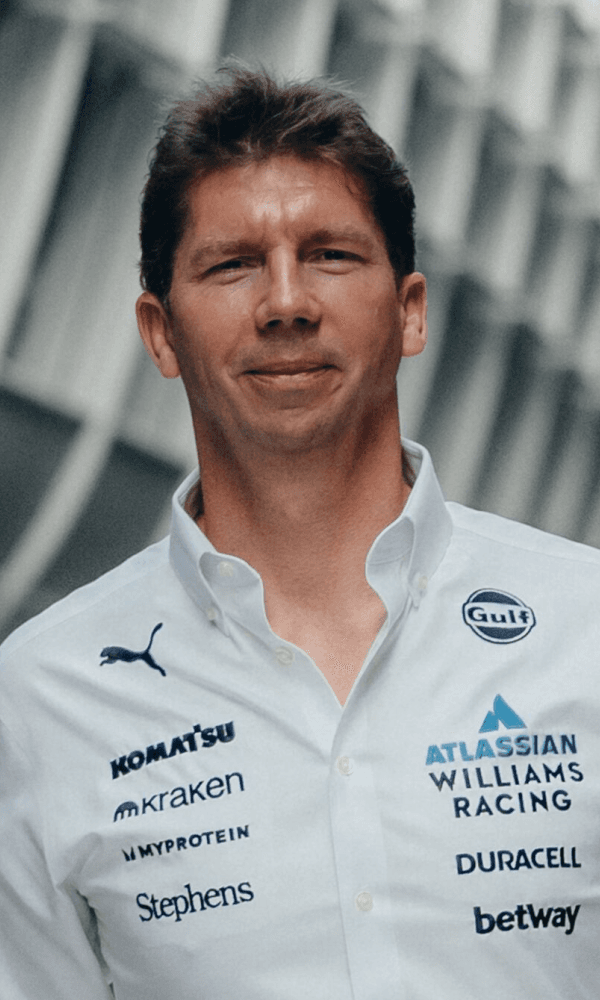
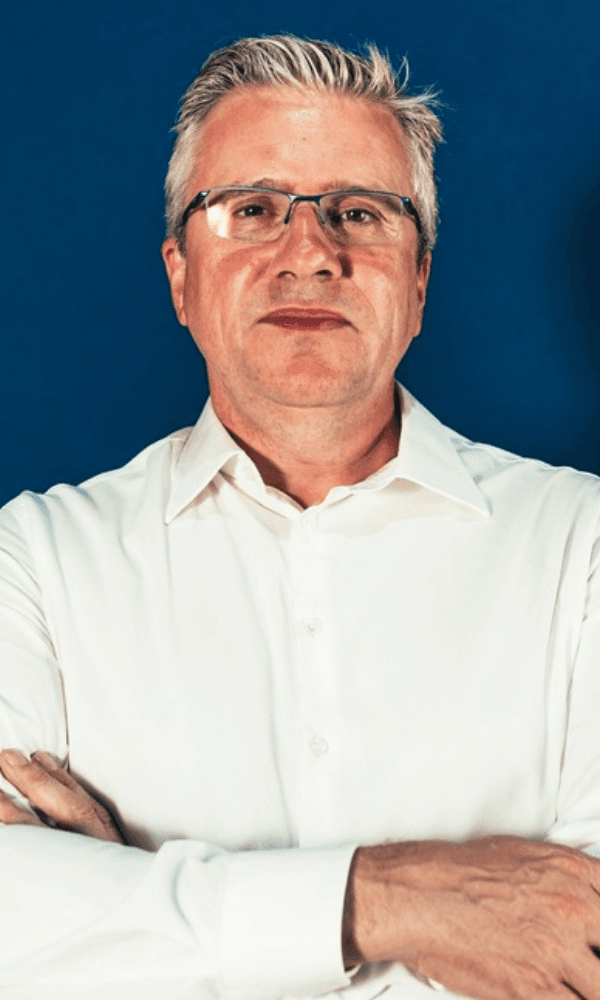
JamesVowles
Team principal
Started
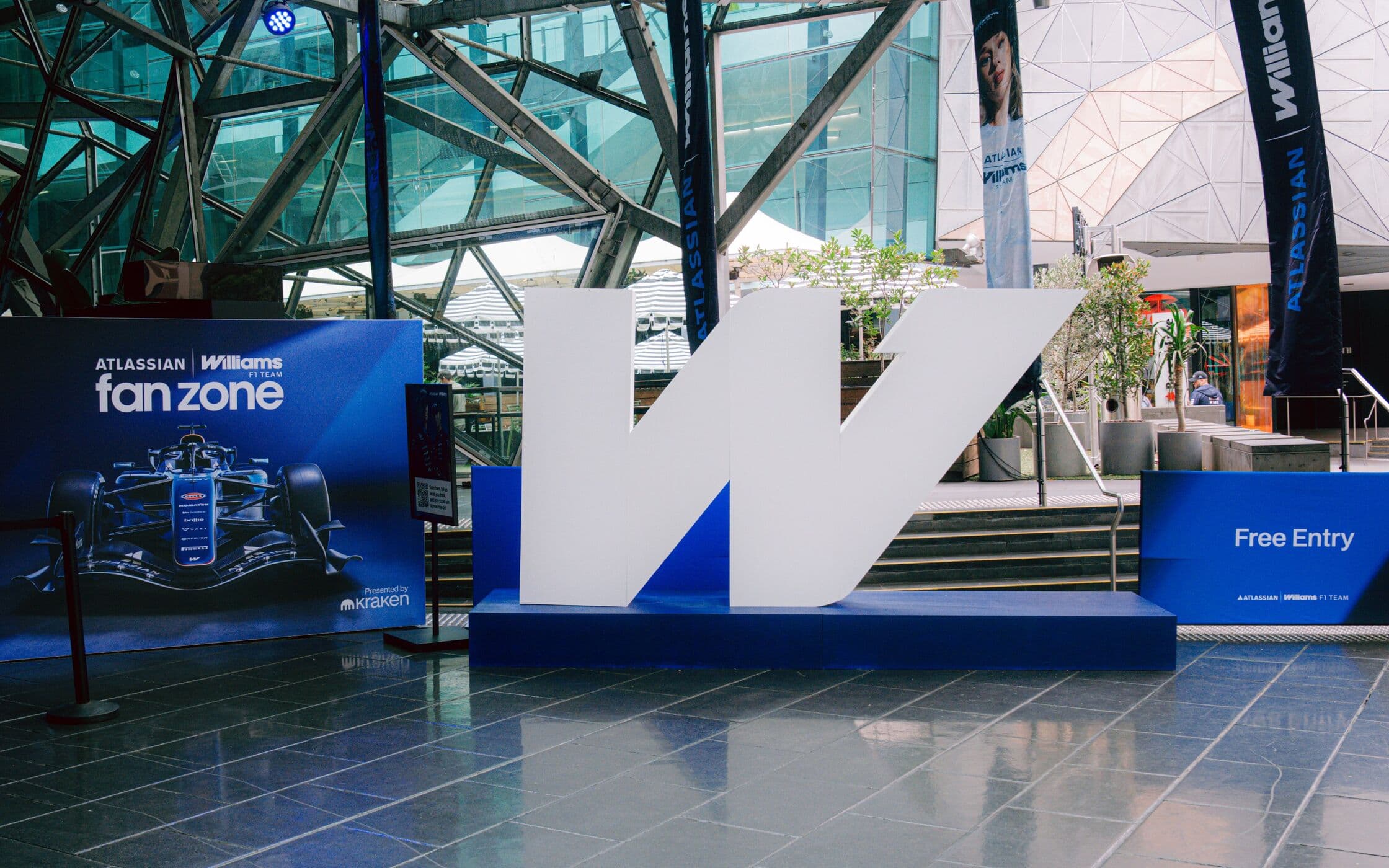
 Williams F1 Team

Team principal
Started
Technical director
Started
Race engineer
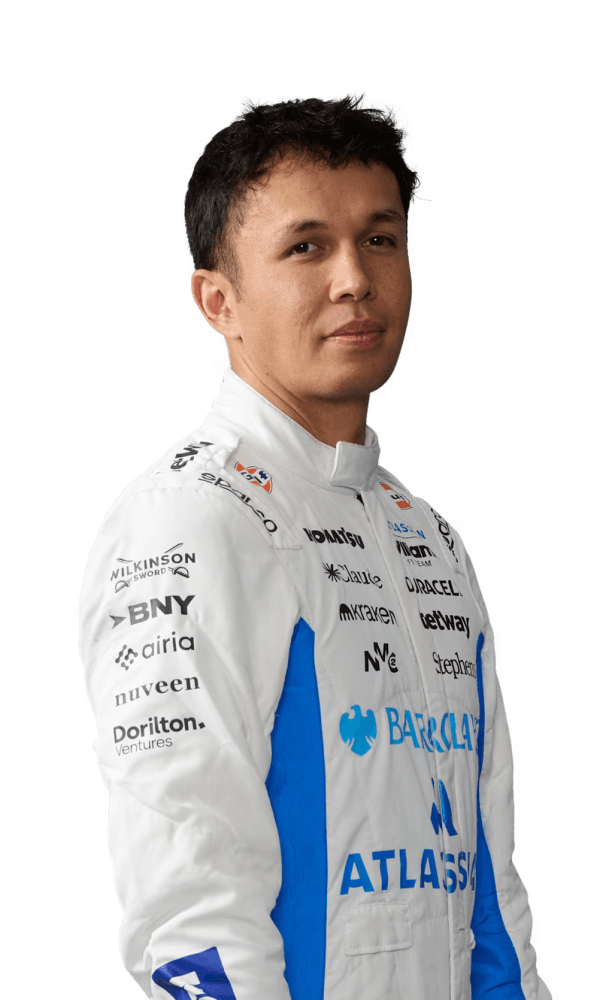
Alex Albon
Started
Race engineer
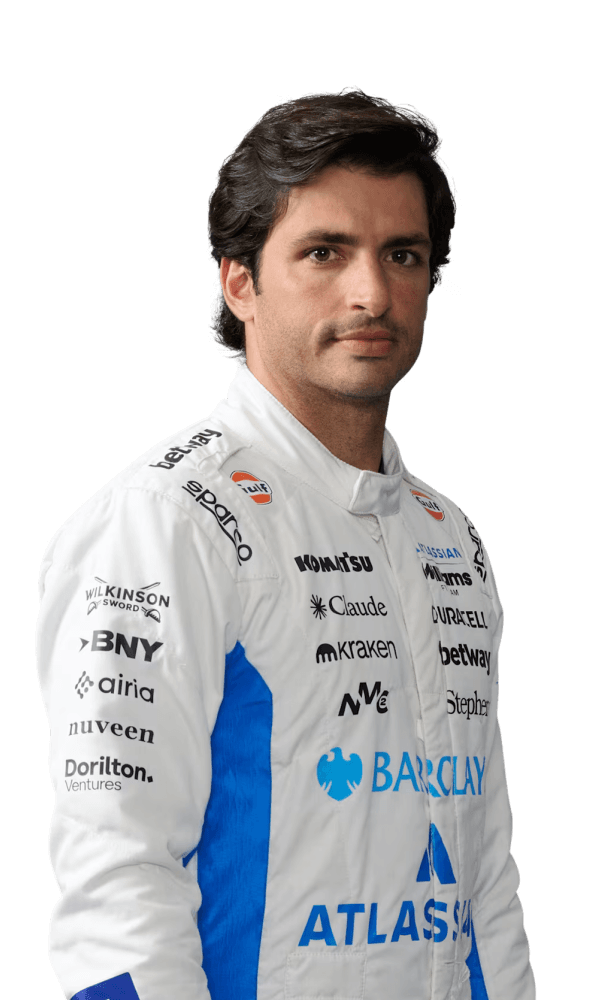
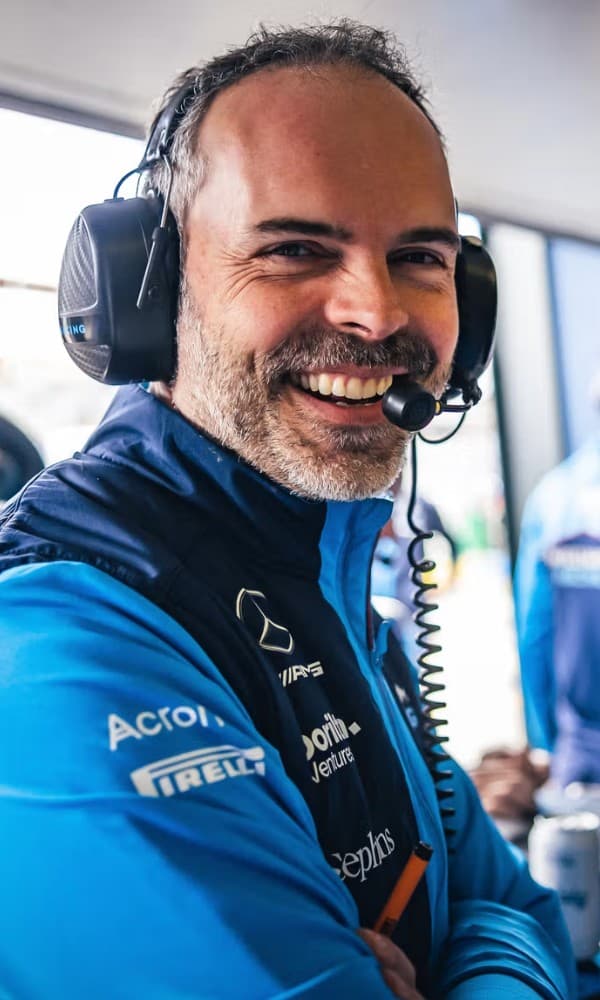
Carlos Sainz
Started
Williams began life in 1977 in a former carpet factory, with a single car and a budget that would not stretch to a full Formula 1 season. Founded by Frank Williams and Patrick Head, the British outfit gradually became one of the championship’s most successful teams. By the end of the 2025 season, Williams had won nine constructors’ championships, seven drivers’ world titles and 114 grands prix. Its most successful period came in the 1980s and 1990s, when the likes of Nigel Mansell, Alain Prost and Damon Hill drove for the team. After a long decline away from the front of the grid, Williams began making progress again under new ownership and finished fifth in the constructors’ championship in 2025.
The history of the current Williams team began in 1977, when Frank Williams and designer Patrick Head founded Williams Grand Prix Engineering. Frank had previously run his own racing team, but after an unsuccessful partnership with businessman Walter Wolf, he decided to build a new outfit virtually from scratch.
Williams contested its debut season with a March car, driven by Belgian Patrick Nève. A year later, the team fielded its own car, the FW06, designed by Patrick Head. Australian Alan Jones joined as its new driver.
The first major breakthrough came in the 1979 season. Swiss driver Clay Regazzoni won the British Grand Prix at Silverstone to secure Williams’ first Formula 1 victory. Alan Jones then added another four wins as the team finished second in the constructors’ championship behind Ferrari.
Williams claimed its first championship double as early as 1980. Alan Jones became drivers’ world champion, while the team also won the constructors’ championship. The FW07 played a significant role, its use of ground effect making it one of the most competitive cars in the field.
Williams successfully defended its constructors’ title in 1981, and a year later another of its drivers, Keke Rosberg, became world champion. The Finn took the title despite winning just one grand prix all season.
In the mid-1980s, Williams began working with Japanese manufacturer Honda, which supplied the team with powerful turbocharged engines. The combination of British chassis design and Japanese power brought another period of success.
Williams won its third constructors’ championship in 1986, although McLaren’s Alain Prost ultimately prevailed in the drivers’ title battle. Nigel Mansell and Nelson Piquet were among the leading contenders, but their rivalry and technical problems influenced the final outcome.
The year 1986 also brought one of the most difficult events in the team founder’s personal life. Frank Williams suffered a serious road accident in France that left him paralysed and dependent on a wheelchair. Nevertheless, he continued to lead the team and remained its central figure for decades to come.
Williams dominated the championship again in 1987. Nelson Piquet secured his third drivers’ title, while the team won another constructors’ championship by a substantial margin. Mansell finished second in the drivers’ standings.
A brief period of poorer results followed the end of the Honda partnership. Williams, however, forged a new technical partnership with Renault that laid the foundations for its hugely successful era in the 1990s.
In the early 1990s, Williams once again established itself as Formula 1’s dominant force. The arrival of designer Adrian Newey, who began working alongside Patrick Head on the development of new cars, played a key role.
The result was the revolutionary Williams FW14B, which featured active suspension, advanced aerodynamics and electronic driver aids in 1992. Nigel Mansell won nine of the season’s 16 grands prix in the car to claim his only world title. Williams also won the constructors’ championship by a commanding margin.
Alain Prost joined the team in 1993 and built on Mansell’s success. The Frenchman secured his fourth drivers’ title, while Williams again won the constructors’ championship.
The 1994 season, however, became a tragic chapter in Williams’ history with the death of Ayrton Senna. The three-time world champion had joined from McLaren, but suffered fatal injuries in a crash at the San Marino Grand Prix at Imola on his third start for his new team.
Despite the tragedy, Williams continued to fight for both championships. Damon Hill lost the title battle to Michael Schumacher by a single point, while the British team successfully defended its constructors’ crown.
Further success followed in 1996 and 1997. Damon Hill became world champion in 1996, with Jacques Villeneuve succeeding him a year later. Williams also secured the constructors’ title in both seasons.
Jacques Villeneuve’s 1997 triumph remains Williams’ most recent drivers’ title. That same year, the team also claimed its ninth and, to date, last constructors’ championship.
Williams therefore won five constructors’ titles and four drivers’ championships across the six seasons from 1992 to 1997. This period marked the pinnacle of its racing history.
After its partnership with Renault ended, Williams gradually slipped out of championship contention. Around the turn of the millennium, however, it regained its competitiveness through a partnership with BMW.
Ralf Schumacher and Juan Pablo Montoya drove for the team during this period, regularly fighting for podium finishes and victories. Williams came closest to another constructors’ title in 2003, finishing second behind Ferrari.
A more difficult period followed the end of the BMW partnership in 2005. The team repeatedly changed engine suppliers and was unable to keep pace with the leading outfits.
An unexpected success came at the 2012 Spanish Grand Prix. Venezuelan driver Pastor Maldonado took pole position and went on to win the race ahead of home favourite Fernando Alonso in the Ferrari. It was Williams’ first victory since 2004 and remained its most recent Formula 1 win at the end of the 2025 season.
The 2014 and 2015 seasons brought a brief resurgence. With Mercedes engines and a driver pairing of Felipe Massa and Valtteri Bottas, Williams regularly challenged for podium finishes. It finished third in the constructors’ championship in both seasons.
Those results, however, could not be sustained in the long term. A sharp decline in performance followed the 2017 season, gradually developing into serious competitive and financial difficulties.
The second half of the previous decade brought some of the worst results in Williams’ history. The team could not keep pace with its rivals’ technical development, and its cars regularly ran at the back of the field.
Williams scored just a single point in 2019. It then ended the following season without a point, further highlighting the need for fundamental organisational changes.
In August 2020, the Williams family sold the team to US investment firm Dorilton Capital. The new owner took over the entire operation and secured funding for its continued running.
Shortly after the sale, Claire Williams, the founder’s daughter, who had overseen the team’s day-to-day running since 2013, stepped down from the management. Her departure also marked the end of Frank Williams’ formal involvement in running the team.
The sale brought an end to a family era spanning more than 40 years, during which Williams had become one of Formula 1’s most successful teams. Frank Williams died in November 2021 at the age of 79.
The new owners gradually began investing in modernising the team’s technical facilities and strengthening its workforce. Results on track, however, improved more slowly.
In 2021, George Russell finished second in the rain-shortened Belgian Grand Prix. It was Williams’ first podium finish since 2017. The British driver subsequently moved to Mercedes, with Alex Albon becoming the team’s new lead driver.
A significant step in the team’s reorganisation came ahead of the 2023 season, when James Vowles became Williams’ new team principal. The Briton had previously spent many years at Mercedes, contributing to the works team’s success during its dominant era.
Vowles was tasked with modernising the team’s operations and laying the foundations for a return to competitiveness. Williams therefore began investing in infrastructure, manufacturing processes and the expansion of its technical department.
Pat Fry became an important addition, taking up the role of chief technical officer across the organisation in November 2023. The experienced British engineer had previously worked for McLaren, Ferrari and Alpine, and was given a significant role in reorganising Williams’ technical operations.
The team finished seventh in the constructors’ championship in 2023, with Alex Albon scoring most of its points. A year later, however, Williams dropped to ninth. The FW46 had several weaknesses, and the team also struggled with a shortage of spare parts.
Argentine driver Franco Colapinto was also given an opportunity during the 2024 season, replacing Logan Sargeant. His performances yielded several points finishes, but Williams still ended the campaign with just 17 points.
Carlos Sainz became a major addition for the following season after leaving Ferrari following four years with the team. The Spaniard signed a multi-year contract with Williams to partner Alex Albon.
Williams entered the 2025 season with the FW47 and a driver line-up of Carlos Sainz and Alex Albon. The opening races already suggested that the British team had made significant progress compared with the previous year.
Albon finished fifth in the season-opening Australian Grand Prix and continued to deliver similar performances at subsequent events. His best results included fifth places in Miami, Imola and the Netherlands.
After moving from Ferrari, Sainz initially found it harder to adapt to his new surroundings, with technical problems and difficult races often affecting his results. Gradually, however, he was able to capitalise on the Williams car’s growing competitiveness.
The first major breakthrough came at the 2025 Azerbaijan Grand Prix, where Carlos Sainz finished third. The Spaniard started second and delivered an excellent performance to secure Williams’ first podium finish since 2021.
He added another podium at the penultimate grand prix of the season in Qatar. Sainz again finished third, with his result sealing fifth place in the constructors’ championship for Williams.
The team had therefore achieved its main on-track objective before the final race in Abu Dhabi.
Williams ended the 2025 season fifth in the constructors’ championship with 137 points. It improved by four positions on the previous year and scored 120 more points.
Alex Albon finished eighth in the drivers’ standings with 73 points, while Carlos Sainz was ninth with 64. Both drivers therefore ended the championship inside the top 10.
Fifth place represented Williams’ best result since 2017 and confirmed the progress the team had made under James Vowles. The strengthening of its technical department and improvements to its operations following the takeover by Dorilton Capital also played a significant role.
The 2025 season also marked the beginning of a new era under the Atlassian Williams Racing name. US technology company Atlassian became the team’s title partner in one of the most significant commercial deals in its history.
Although Williams had not ended its wait for another Formula 1 victory by the end of 2025, Carlos Sainz’s two podiums and Alex Albon’s regular points finishes represented clear progress compared with previous seasons.
The British team thus entered the next chapter of its history with nine constructors’ championships and seven drivers’ titles. At the end of the 2025 season, Williams remained the third most successful team in Formula 1 history by number of constructors’ championships, behind Ferrari and McLaren.

