
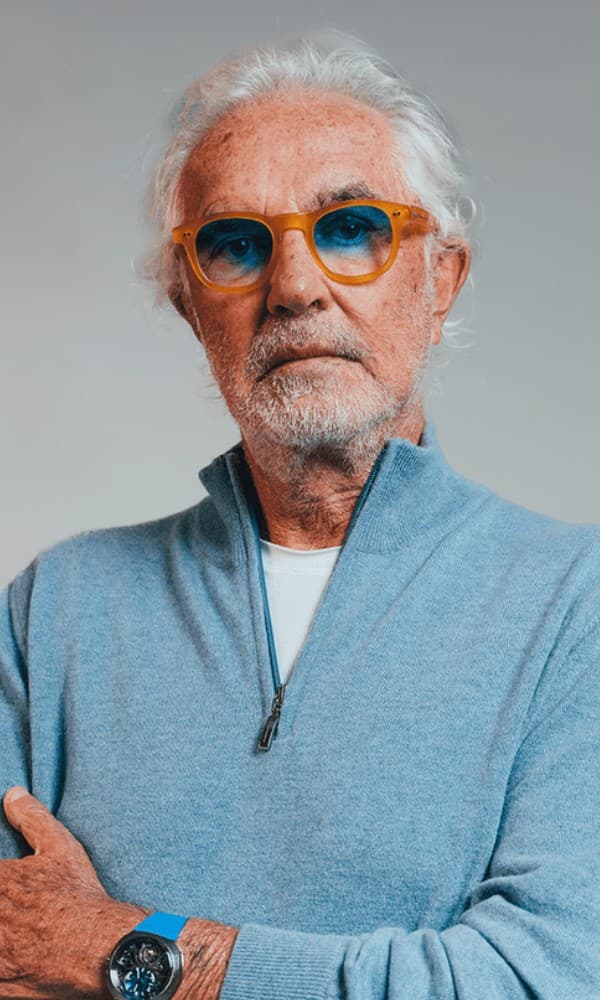
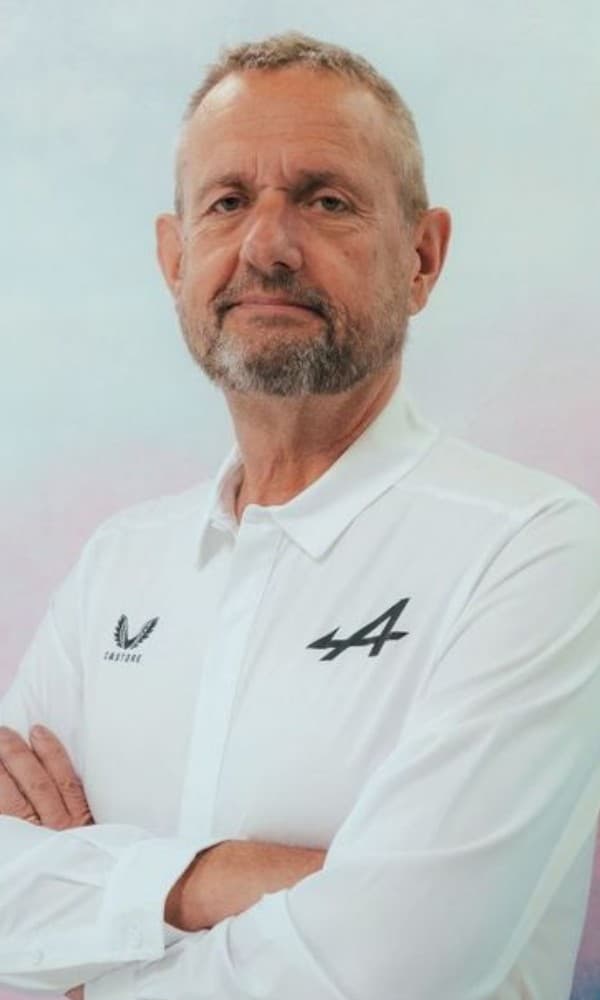
FlavioBriatore
Executive Advisor
Started
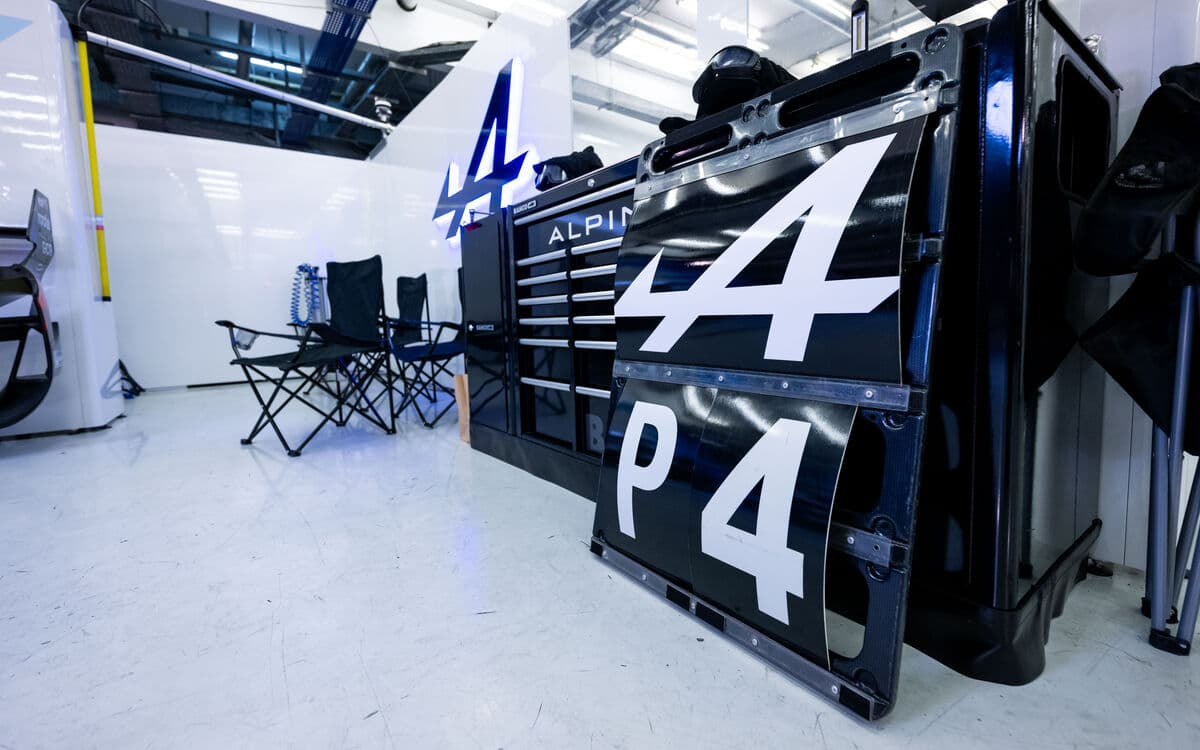
 Alpine F1 Team
Executive Advisor
Started
Managing Director
Started
Technical director
Started

Racing director
Started
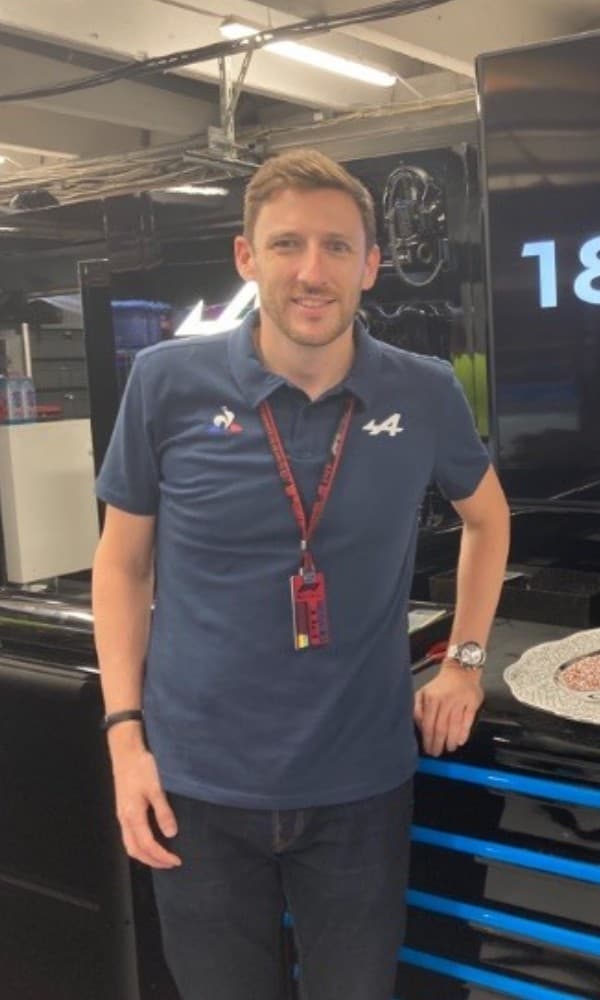
Race engineer
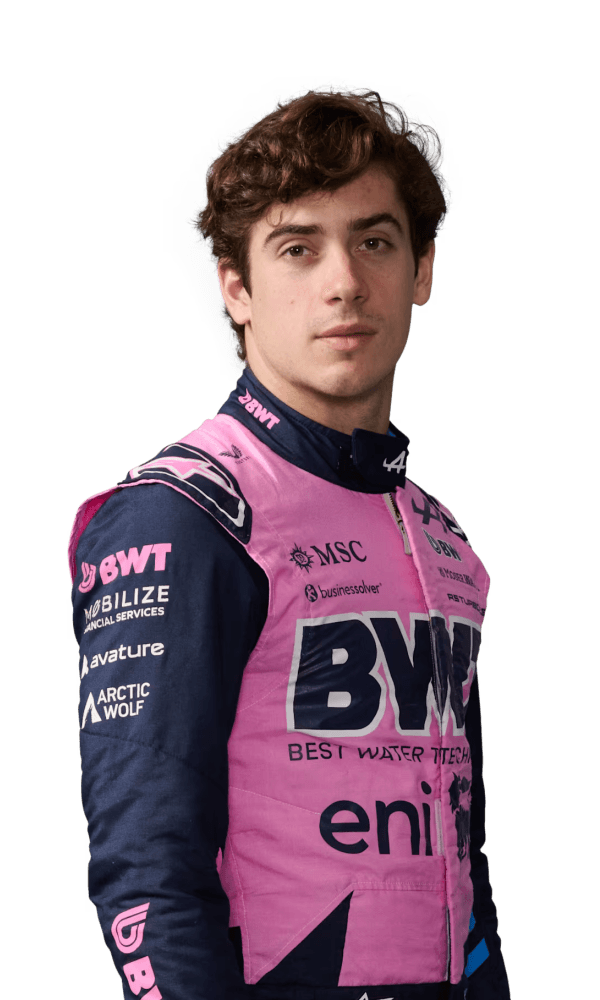
Franco Colapinto
Started
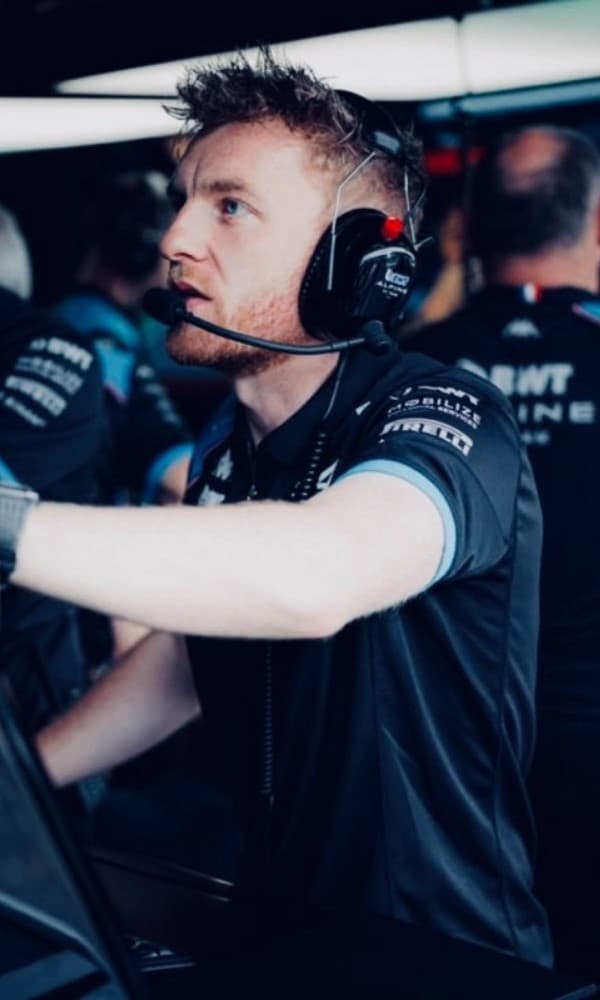
Race engineer
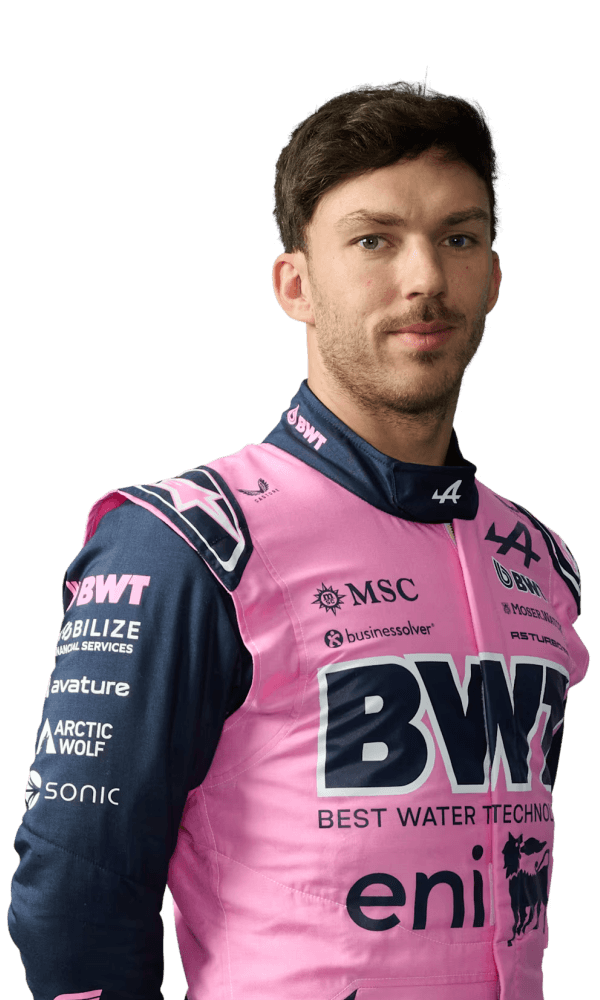
Pierre Gasly
Started
Alpine only entered Formula 1 under its own name in 2021, but its Enstone factory had celebrated world titles with Michael Schumacher and Fernando Alonso long before then. The French brand took over from the Renault works team, continuing the history of an outfit that had previously raced as Toleman, Benetton and Lotus. Esteban Ocon claimed Alpine's first Formula 1 victory at the 2021 Hungarian Grand Prix. However, the team was unable to challenge the frontrunners consistently in the years that followed and finished the 2025 season last in the constructors' championship.
The history of today's Alpine team dates back to 1981, when British outfit Toleman entered Formula 1. Initially one of the championship's smaller teams, it made its mark in 1984 thanks to a young Ayrton Senna. The Brazilian finished second in the rain-hit Monaco Grand Prix to claim his first Formula 1 podium.
Italian clothing company Benetton took over the team in 1986. The outfit gradually built up a competitive technical operation and moved to Enstone in Britain in the early 1990s, where it remains based today.
The decisive turning point came with the signing of Michael Schumacher, who joined Benetton during the 1991 season. Under Flavio Briatore's leadership, the German gradually established himself as a leading title contender.
In 1994, Schumacher secured his first world championship after a dramatic battle with Williams driver Damon Hill. He successfully defended his crown a year later, while Benetton claimed its first and only constructors' championship. Johnny Herbert also made a significant contribution to that success, winning two Grands Prix in 1995.
Schumacher moved to Ferrari at the end of the season, but his two titles laid the foundations for the Enstone team's championship-winning history.
Another successful chapter began after French manufacturer Renault bought Benetton in 2000. From the 2002 season, the outfit officially competed as Renault F1 Team and gradually established itself as one of Ferrari and McLaren's biggest rivals.
Fernando Alonso became the central figure of the new era. The Spaniard claimed his first Formula 1 victory at the 2003 Hungarian Grand Prix and led Renault to the world title two years later.
In 2005, Alonso ended Michael Schumacher and Ferrari's five-year dominance. At the age of 24, he became Formula 1's youngest world champion at the time. Renault also secured the constructors' championship, with his team-mate Giancarlo Fisichella playing an important role.
Renault successfully defended both world titles in 2006. Alonso beat Schumacher in a thrilling battle, while the French team also finished ahead of Ferrari in the constructors' standings.
Behind those successes were Flavio Briatore's leadership and a technical team in which Bob Bell and Pat Symonds held key positions. Renault thus built on Benetton's achievements and confirmed that the Enstone outfit could win world championships under different names.
The following years, however, brought a decline in performance. In 2009, Renault was also rocked by the scandal surrounding Nelson Piquet Jr's deliberate crash at the 2008 Singapore Grand Prix, after which Briatore and Symonds left the team.
The outfit was renamed Lotus in 2012. Kimi Räikkönen joined its driver line-up, taking victories in Abu Dhabi in 2012 and Australia in 2013. After another period of poorer results, Renault returned as a works team in 2016.
Its performance gradually improved with drivers including Nico Hülkenberg, Carlos Sainz and Daniel Ricciardo. The Australian secured two podium finishes in 2020, with Esteban Ocon adding another. Renault finished fifth in the constructors' championship that year as it prepared for another major change of identity.
From the 2021 season, the outfit began competing as Alpine F1 Team. French manufacturer Renault wanted to raise the profile of its Alpine sports car brand, which had a rich history, particularly in rallying and endurance racing.
The team began its first season with Fernando Alonso and Esteban Ocon as its driver pairing. Two-time world champion Alonso's return was one of the biggest stories ahead of the season, but it was his French team-mate who delivered the new brand's first major success.
At the 2021 Hungarian Grand Prix, Ocon capitalised on a chaotic start to the race and produced an excellent performance to claim his maiden Formula 1 victory. Alonso also played an important role, holding up Lewis Hamilton's charge for a prolonged spell in the closing stages.
The Hungarian triumph remained Alpine's only Formula 1 victory through to the end of the 2025 season.
Alonso added a third-place finish at the 2021 Qatar Grand Prix, and Alpine ended its debut season fifth in the constructors' championship.
The team made further progress the following year. Although Alpine did not score a single podium finish in 2022, consistent points finishes secured fourth in the constructors' standings. It was the team's best championship finish since Renault's rebranding.
Alonso left for Aston Martin at the end of the season and was replaced by Pierre Gasly. Alpine therefore fielded an all-French driver pairing of Gasly and Ocon in 2023.
The 2023 season brought Alpine two podium finishes. Esteban Ocon finished third at the Monaco Grand Prix, while Pierre Gasly claimed the same position at the Dutch Grand Prix.
Despite its drivers' individual successes, the outfit could not consistently challenge the fastest teams. It finished sixth in the constructors' championship with 120 points, a drop from the previous season.
The results were accompanied by significant management changes. Team principal Otmar Szafnauer and sporting director Alan Permane both left their roles during 2023. Bruno Famin took temporary charge of the team.
The problems continued at the start of the 2024 season. The A524 was among the heaviest and least competitive cars on the grid. Alpine failed to score a single point in the opening five Grands Prix.
During the season, Flavio Briatore returned to the team as executive adviser, while Oliver Oakes became its new team principal. Alpine gradually improved its performance, but its biggest success came only in the closing part of the season.
Esteban Ocon and Pierre Gasly finished second and third in the wet 2024 São Paulo race. The French pair capitalised on the difficult conditions and the right strategy calls to secure Alpine's first double podium.
The result had a significant impact on the constructors' standings. It lifted the team from ninth to sixth, a position it held until the end of the season. It finished the 2024 campaign with 65 points.
Ocon subsequently moved to Haas, and Alpine began preparing a new driver line-up.
Alpine entered the 2025 season with Pierre Gasly and Australian rookie Jack Doohan. The French team wanted to build on its improvement at the end of the previous campaign, but the A525 lagged behind its rivals from the outset.
Doohan failed to score a single point in the opening six Grands Prix, prompting the team's management to make a change. From the Emilia Romagna Grand Prix, he was replaced by Argentine driver Franco Colapinto, who had previously raced for Williams.
However, that move did not bring a significant improvement either. Colapinto failed to finish in the points-paying top 10 in the remaining races, leaving Gasly to shoulder most of the responsibility for delivering results.
The Frenchman achieved Alpine's best result at the British Grand Prix, where he finished sixth. He reached the final part of qualifying on several occasions during the season, but often lacked the race pace to fight regularly for points.
The on-track problems were accompanied by further management changes. In May 2025, team principal Oliver Oakes unexpectedly resigned, with executive adviser Flavio Briatore taking over his duties. Experienced manager Steve Nielsen joined the outfit in September, taking responsibility for the team's day-to-day operations at Enstone. David Sanchez oversaw the car's technical development.
Alpine finished the 2025 season tenth and last in the constructors' championship with 22 points. All of those points were scored by Pierre Gasly, who finished 18th in the drivers' standings. Neither Jack Doohan nor Franco Colapinto scored a point.
The result marked the outfit's worst finish since its return to Renault works ownership in 2016. Alpine was also the only team to fail to score at least 70 points in the 2025 season.
The 2025 campaign was also the last in which Alpine used its own Renault power units, manufactured at Viry-Châtillon in France. The Renault Group decided to end its Formula 1 engine development and focus its technical resources on other projects. Alpine had already agreed a deal in 2024 for future supplies of Mercedes power units and gearboxes.
For the team, the end of the 2025 season therefore marked not only a sporting disappointment, but also the close of an important chapter tied to Renault's works engine programme.
Although Alpine had claimed only one victory and six podium finishes under its current name by the end of 2025, its history is considerably richer. The current outfit's predecessors won four drivers' world titles and three constructors' championships. Michael Schumacher's successes with Benetton and Fernando Alonso's with Renault therefore remain the standout chapters in the history of the racing organisation that now competes under the Alpine name.
